Why the Bozeman Rental Market Matters Right Now
The Bozeman rental market has undergone dramatic changes over the past few years, shifting from one of the tightest markets in Montana to a landscape offering new opportunities for both renters and property owners. Understanding these shifts is essential for anyone looking to invest in rental properties or manage existing ones successfully.
Quick Snapshot of the Bozeman Rental Market:
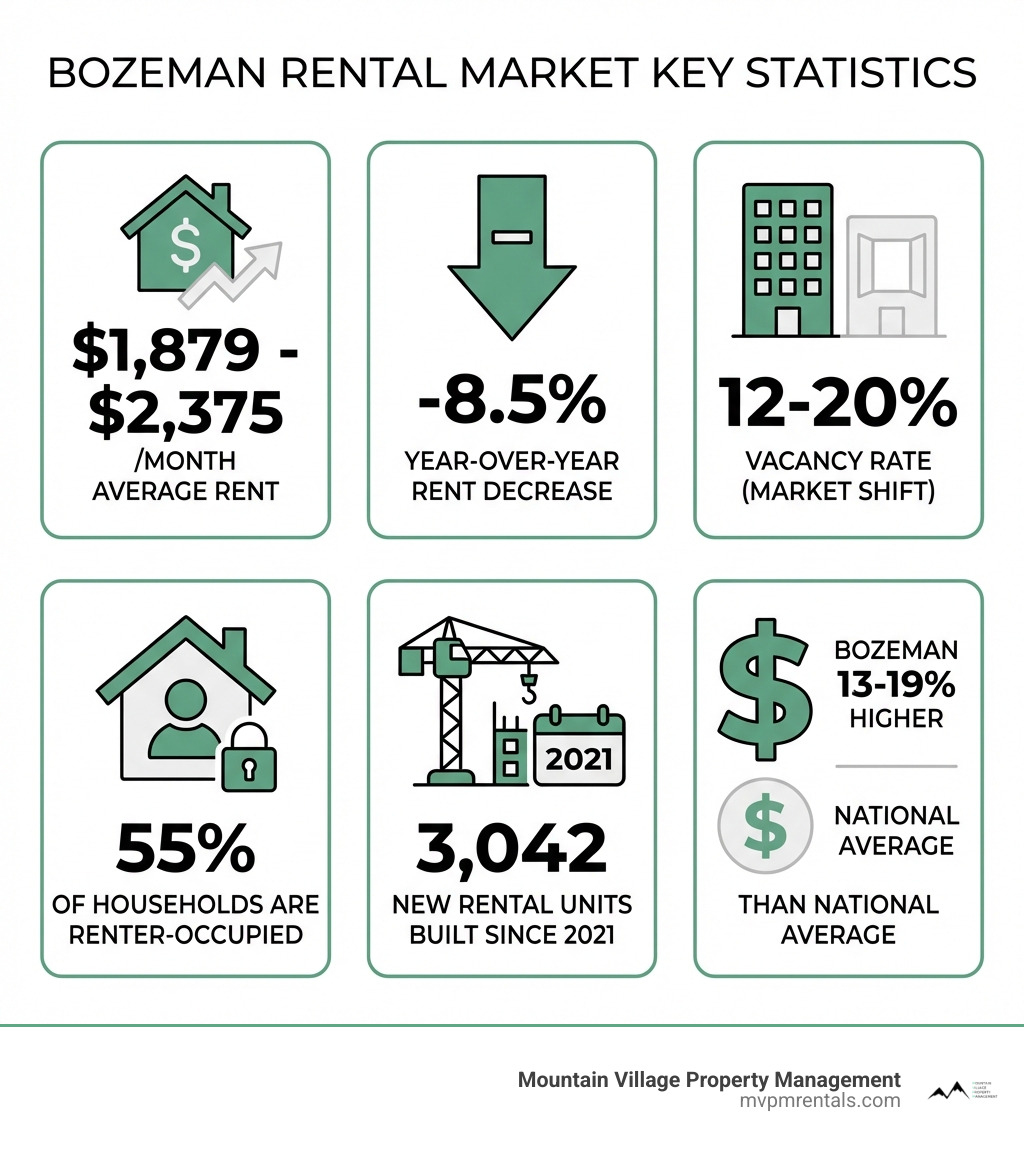
- Average Rent: $1,879 – $2,375/month (depending on source and property type)
- Recent Trend: Rents decreased 8.5% in the past year (-$125 to -$159/month)
- Vacancy Rate: 12-20%, up from less than 2% in 2019
- Market Status: Shifted from landlord’s market to tenant’s market
- Cost vs. National Average: 13-19% higher than U.S. average
- New Construction: 3,042+ rental units built since 2021, with 4,000+ more in pipeline
Bozeman once commanded some of the highest rents in Montana, with prices nearly doubling between 2019 and their recent peak. A one-bedroom apartment that cost around $1,000 in 2019 surged to over $2,200 at the height of the market. But a post-pandemic building boom has flooded the city with new apartments, creating a surplus that’s driving prices down and giving renters negotiating power for the first time in years. Property owners now face vacancy rates as high as 20% in some complexes, prompting many to offer concessions like two months of free rent.
This market correction presents both challenges and opportunities. For property owners, higher vacancy rates mean increased competition for quality tenants and downward pressure on rental income. However, this is also a time to differentiate your property through professional management, responsive maintenance, and strategic pricing that balances occupancy with profitability.
I’m Pablo Negrete, co-owner of Mountain Village Property Management, where we’ve maintained a 98% occupancy rate throughout these Bozeman rental market fluctuations by adapting our strategies to current conditions and providing property owners with data-driven insights. With nearly 20,000 students at Montana State University, a growing remote workforce, and continued demand from outdoor enthusiasts, Bozeman’s fundamentals remain strong—but success now requires a more nuanced approach.
The Current State of the Bozeman Rental Market
For anyone looking to dive into the Bozeman rental market, whether as a prospective tenant or a property owner, understanding the current numbers is the first step. The data provides a clear picture of what to expect today.
Average Rent and Apartment Sizes in Bozeman
When we talk about average rent in Bozeman, it’s important to note that figures can vary slightly depending on the source and the specific data points collected. For instance, some reports indicate an average rent of $2,224 as of April 2025, while others suggest $2,375, and another even states $1,879 per month. This variance often comes down to the types of properties included in the calculation (apartments only, or houses, condos, and apartments combined) and the exact month of data collection. However, what remains consistent across all reports is that Bozeman’s rental prices are significantly higher than the national average.
The average size for a Bozeman, MT apartment is approximately 982 square feet. This provides a baseline, but apartment sizes can, of course, vary significantly by unit type. Let’s break down the rent by unit type:
- Studio apartments: Averaging around $2,075 per month.
- One-bedroom apartments: Typically $1,879 per month, though some sources put it just over $1,900.
- Two-bedroom apartments: Averaging around $2,186 per month. Notably, two-bedroom apartments have seen some price decreases, averaging just over $1,700 per month in some reports.
- Three-bedroom apartments: Generally $2,568 per month.
But what about houses? The market for houses follows a similar trend, often with slightly higher prices reflecting more space and privacy:
- One-bedroom houses: Average $2,074 per month.
- Two-bedroom houses: Average $1,880 per month.
- Three-bedroom houses: Average $2,766 per month.
- Four-bedroom houses: Average $4,044 per month.
- Three-bedroom condos: Average $2,625 per month.
It’s also worth noting the demographic makeup: 12,806 or 55% of the households in Bozeman, MT are renter-occupied. This highlights a robust and active rental community, making the dynamics of the Bozeman rental market particularly crucial for a significant portion of its residents.
Understanding Bozeman’s Rent Ranges and Cost of Living
Beyond the averages, understanding the distribution of rental prices gives us a clearer picture of affordability in the Bozeman rental market. Data shows that the majority of apartments fall into higher price brackets. For instance, 45% of apartments fall within the $1,501-$2,000 range, and another 27% are priced between $2,001-$2,500. This means that a substantial 72% of Bozeman’s apartment rentals are priced above $1,500. If we look at units over $2,000, they constitute a significant portion of the market, with 50% of units priced above $2,000 in one report.
This trend is reflected in the overall cost of living. The cost of living in Bozeman, MT, is 21.0% higher than the national average. Housing, in particular, is a major contributor to this, being 50.3% more expensive than the national average. This is a crucial factor for anyone considering a move to our vibrant community or for property owners setting rental rates. You can explore more about these figures through the Cost of Living Index data.
Given these figures, a common question we hear is: “What salary do I need to live comfortably in Bozeman, MT?” Based on the average rent of $1,879 (one of the lower reported averages) and the common guideline of spending no more than 30% of your monthly income on rent, you would need to make approximately $6,263 per month or $75,156 per year. This salary target helps put the Bozeman rental market into perspective for individuals and families planning their finances.
How Bozeman Compares: A Regional and National Snapshot
The Bozeman rental market stands out, not just in Montana, but often on a national scale. Let’s put some numbers side-by-side to illustrate this:
| City/Region | Median Rent (per month) |
|---|---|
| Bozeman, MT | $2,400 |
| Billings, MT | $1,431 |
| Missoula, MT | $1,395 |
| Belgrade, MT | $2,250 |
| Three Forks, MT | $2,125 |
| National Average | $2,100 |
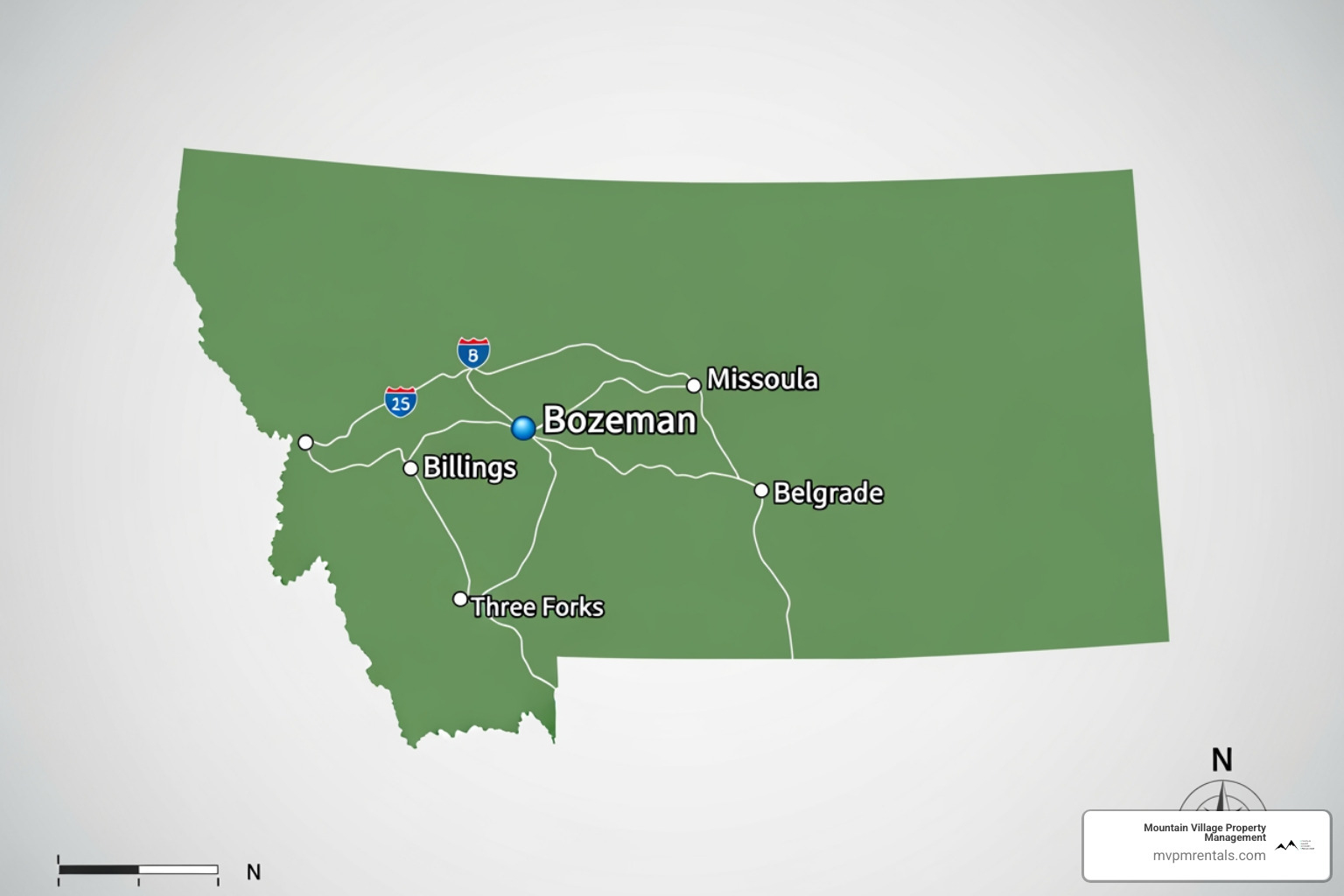
As you can see, Bozeman’s median rent of $2,400 per month significantly surpasses that of other major Montana cities like Billings and Missoula. Even neighboring communities such as Belgrade and Three Forks, while also higher than the state average, don’t quite reach Bozeman’s levels. When compared to the national average, Bozeman’s average rent of $2,375 is 13.1% higher than the national average of $2,100. Other reports place Bozeman’s rent as high as 19% above the national average.
This isn’t just a Montana phenomenon. Bozeman’s median rent has, at times, topped that of many major U.S. cities. While giants like New York City ($3,595), Los Angeles ($2,800), and San Diego ($3,020) might still be higher, Bozeman has often surpassed cities like Chicago ($1,950), Houston ($1,900), Phoenix ($2,095), Philadelphia ($2,095), Dallas ($2,000), and even Austin ($2,250) in median rent, according to some analyses. This illustrates just how unique and competitive the Bozeman rental market has been, driven by a blend of factors we’ll explore next.
Key Drivers and Recent Trends Shaping Bozeman’s Market
The Bozeman rental market is a dynamic beast, constantly shaped by a confluence of economic, social, and environmental factors. To truly understand where we are today, we need to look at the journey that brought us here.
From Scarcity to Surplus: A Timeline of Recent Changes
Not long ago, the Bozeman rental market was defined by extreme scarcity. Rents had nearly doubled in the past six years, with a one-bedroom apartment going for about $1,000 in 2019 rapidly escalating to over $2,200 at its peak. Vacancy rates were historically below 2% in 2019, making it a fierce landlord’s market where tenants had little to no negotiating power. Long waitlists were common, and properties were leased before they were even completed.
However, the tide has turned dramatically. Following the post-pandemic surge in demand, developers started on a significant building boom. Since 2021, an impressive 3,042 rental units have been built in Bozeman, with more than 1,000 of those units completed in 2024 alone. With over 4,000 additional units currently in the planning pipeline, this influx of new supply has fundamentally altered the market.
This surge in construction has led to a significant market flip. What was once a landlord’s paradise has become a tenant’s market. Vacancy rates have soared to at least 12%, with some brokers anecdotally reporting rates as high as 20%. This is a stark contrast to the less than 2% seen just a few years prior. The increased supply and higher vacancies have triggered a downward trend in rental prices. In the last year, rent in Bozeman, MT, has decreased by 8.5%, which averages out to $159 less per month in some reports, and $125 less per month in others.
To attract tenants, landlords in new developments are now offering concessions that were unimaginable just a year or two ago. For example, one-bedroom apartments at the Oxbow Apartments saw rents tumble from $2,200 to $1,800 per month, with offers of up to two months free rent. Similarly, at the Edison Apartments, a one-bedroom is now leasing for about $1,495 a month compared to $1,900 last year, also due to concessions. Even properties like Highmark Bozeman are offering up to eight weeks free rent on some units. These landlord concessions are a clear indicator of the shift from a scarcity-driven market to one where supply is catching up with, and in some segments, exceeding demand.
Factors Fueling Demand in the Bozeman Rental Market
Despite the recent market correction, the underlying demand for living in Bozeman remains incredibly strong. This isn’t just a fleeting trend; it’s fueled by several persistent factors that make Bozeman such an attractive place to live.
Firstly, population growth in Gallatin County, where Bozeman is located, has been among the fastest in the nation. This steady influx of new residents, drawn by the area’s undeniable charm, naturally translates into sustained demand for housing.
Secondly, Bozeman has transformed into a thriving economic hub, earning its reputation as A “Booming Tech Town”. This economic vitality attracts professionals seeking opportunities beyond traditional urban centers. Complementing this, the rise of remote work has brought an influx of individuals with higher wages, often relocating from more expensive coastal cities. While this has historically contributed to rising rental prices by skewing the area median income, it also signifies a robust segment of the renter population with strong financial footing.
Thirdly, the lifestyle appeal of Bozeman is unparalleled. Nestled amidst the stunning Bridger Mountains, with easy access to world-class skiing, hiking, fishing, and Yellowstone National Park, Bozeman offers an exceptional quality of life. It’s consistently rated highly for its livability and outdoor recreation opportunities, making it a magnet for adventurers and those seeking a balanced, active lifestyle.
Finally, the presence of Montana State University (MSU) is a constant and significant driver of rental demand. With nearly 20,000 students, MSU creates a consistent need for housing, particularly for studios and one-bedroom apartments. Student rentals introduce cyclical spikes in demand, especially around the start of academic semesters, ensuring a lively and active segment of the Bozeman rental market. This mix of population growth, economic opportunity, lifestyle, and a strong university presence ensures that even with increased supply, demand for rentals in Bozeman will likely remain robust in the long term.
The Impact of Tourism and Short-Term Rentals
Bozeman’s allure as a tourist destination and gateway to Yellowstone National Park is a double-edged sword for the long-term Bozeman rental market. While tourism brings economic benefits, it also has a significant impact on housing availability and affordability.
One of the most notable effects is the shift of properties from the long-term rental market to short-term rentals (STRs). Many property owners, enticed by the prospect of higher profit margins, choose to list their units on platforms like Airbnb and Vrbo rather than offering them to long-term tenants. This conversion directly reduces the inventory of homes available for residents seeking traditional leases. While we don’t have exact numbers for Bozeman, the general trend in popular tourist destinations is that a significant portion of potential long-term housing is absorbed by the vacation rental market.
This reduction in long-term rental inventory inevitably puts upward pressure on prices for the remaining units. When fewer properties are available, competition among long-term renters intensifies, allowing landlords to command higher rents. This phenomenon exacerbates the affordability challenges faced by local workers, families, and students who rely on the long-term rental market.
The presence of a thriving tourism industry also contributes to the overall high cost of living in Bozeman, as businesses cater to visitors with higher disposable incomes, which can ripple through various sectors, including housing. While the recent surge in new apartment construction has started to mitigate some of these pressures, the ongoing appeal of short-term rentals means that this segment will continue to be a significant factor shaping the dynamics and challenges within the Bozeman rental market.
Navigating the Market: Challenges and Opportunities
The current state of the Bozeman rental market presents a unique landscape, with both challenges and opportunities for those involved. Whether you’re searching for a place to call home or managing a property, understanding these dynamics is key to success.
For Renters: Finding Your Place in a Shifting Landscape
For years, renters in Bozeman faced an uphill battle. High demand, low vacancy rates, and steadily increasing prices meant intense competition and often, compromise. However, the recent market shift from scarcity to surplus has introduced new opportunities.
Challenges: While prices have softened, Bozeman remains an expensive city. The average rent is still significantly higher than the national average, and the overall cost of living is 21% above the national benchmark, with housing being 50.3% more expensive. This means high costs remain a primary challenge for many. Finding truly “affordable” options, especially for those making less than the area median income, can still be a struggle.
Opportunities: This is where the market correction truly benefits renters.
- Negotiation Power: With higher vacancy rates (12-20%), renters now have more leverage to negotiate lease terms, including price. Lauri Vandermark’s story of renegotiating her lease for significant savings is a prime example.
- More Choices: The influx of new construction, particularly in market-rate apartments, means more units are available. This expands options and reduces the frantic rush that characterized the market just a few years ago.
- Concessions: New developments are actively offering incentives like free rent for several months (e.g., two months free at Oxbow, eight weeks free at Highmark) to attract tenants. These concessions can significantly reduce the effective monthly rent.
- Preparing for Success: We advise renters to have all necessary application documents ready, demonstrate stable income or strong references, and consider working directly with local property managers who often have early access to upcoming rentals.
Knowing your rights as a tenant is also crucial. Montana has specific tenant laws that protect both renters and landlords. We encourage all tenants to familiarize themselves with these regulations. For comprehensive information, we recommend reviewing Montana Tenant Law. Additionally, our team at Mountain Village Property Management provides valuable resources and assistance for tenants, which you can explore further on our Tenant services page.
For Property Owners: Maximizing Your Investment in the Bozeman Rental Market
The shifting dynamics of the Bozeman rental market present a new set of considerations for property owners. What was once a relatively easy market to secure tenants has become more competitive, requiring a refined approach to property management.
Challenges:
- Higher Vacancy Rates: The most immediate challenge is the increase in vacancy rates. With more units on the market, properties may sit vacant longer, impacting cash flow.
- Increased Competition: Owners are now competing with a larger pool of available properties, many of which are brand new and offering attractive concessions. This can put downward pressure on rental income if not managed strategically.
- Downward Pressure on Income: While overall demand remains strong, the need to offer incentives or adjust pricing to secure tenants means owners might see slightly lower effective rents than during the market’s peak.
Opportunities: Despite these challenges, there are significant opportunities for savvy property owners to thrive:
- Attracting Quality Tenants: In a more competitive market, well-maintained properties with professional management stand out. Focusing on tenant satisfaction through responsive service and high-quality living environments helps attract and retain reliable tenants.
- Strategic Pricing: Understanding the current market, including what competitors are offering (e.g., concessions), allows for strategic pricing that balances occupancy with profitability. This is where expert market analysis becomes invaluable.
- Importance of Tenant Screening: With more applicants, robust tenant screening becomes even more critical to ensure you’re placing responsible, long-term tenants in your property. This minimizes risks and protects your investment.
- Property Maintenance and Upgrades: Keeping your property in excellent condition and considering modern amenities can make it more appealing in a competitive environment. A well-maintained property not only attracts better tenants but also commands higher rents over the long term.
At Mountain Village Property Management, we specialize in navigating these market shifts for our owners. Our focus on high occupancy rates, thorough tenant screening, and proactive property maintenance ensures that your investment remains profitable even when the market fluctuates. We believe in maximizing rental income for landlords, and we achieve this through a low 8% management fee, $0 setup costs, and a commitment to keeping your units filled with quality tenants. For more detailed information on how we can help you steer these changes and maximize your investment, visit our Property Management services page.
The Future of Renting in Bozeman
As we look ahead, the Bozeman rental market is ready for continued evolution. Understanding these projections and the ongoing efforts to address housing challenges is crucial for everyone involved.
Projections and What to Expect Next
The current trajectory suggests a period of stabilization, and potentially further adjustments, in the Bozeman rental market. After the significant decreases seen in the past year, some forecasts predict that the average rent for an apartment in Bozeman, MT, will settle between $1,674 and $1,915 in 2026. This indicates that the market is still finding its new equilibrium after the recent building boom.
The sheer volume of development in the pipeline underscores this trend. With over 4,000 rental units planned, the supply side of the equation will continue to be robust. However, this also highlights a critical need. To keep pace with future growth and prevent prices from soaring again, Bozeman needs approximately 1,200 new housing units annually. This includes a mix of property types to cater to diverse needs.
Zillow’s assessment of the Bozeman rental market as “COOL” reflects this current state of affairs, indicating that renter demand is currently lower relative to available supply compared to the national average. For property owners, this means that while the frenzied pace of the past is gone, a thoughtful and well-managed approach can still yield strong returns. For renters, it signals a continued opportunity to find more options and potentially better deals than in previous years.
Addressing Affordability and Housing Shortages
One of the most persistent challenges in the Bozeman rental market has been, and continues to be, affordability. Even with recent price decreases, Bozeman remains an expensive place to live for many. The city and various organizations are actively exploring and implementing solutions to address this critical issue.
The City of Bozeman has established an affordable housing fund, which receives roughly $1 million each year from taxpayers, demonstrating a commitment to supporting housing initiatives. Furthermore, the city has passed ordinances that offer incentives to developers who include affordable units in their projects. These incentives aim to encourage the creation of a more diverse housing stock that caters to a wider range of income levels.
We’re also seeing tangible results from these efforts in the form of income-restricted housing examples. For instance, apartments at The Beaumont start as low as $1,271 for a one-bedroom, specifically designed for those making under 60% of the area median income. These types of developments are vital for providing housing solutions for essential workers, students, and families who might otherwise be priced out of the city. The goal is to build roughly 1,200 various types of housing units each year to satisfy future growth and stabilize prices, ensuring that Bozeman remains a place where people from all walks of life can afford to live.
Defining affordability is key: it generally means spending less than 30% of your monthly income on housing. Unfortunately, many renters in Bozeman have historically spent upwards of 50% of their income on rent. Initiatives like these aim to bring that percentage down, creating a more sustainable and equitable housing environment for everyone in our community.
Conclusion: Your Next Steps in Bozeman
The Bozeman rental market is in a period of significant adjustment, offering new opportunities for savvy renters and a new competitive landscape for property owners. Navigating this dynamic environment requires up-to-date knowledge and strategic planning. For property owners looking to thrive in these changing conditions, partnering with an expert like Mountain Village Property Management can ensure your investment is protected and your rental income is maximized. Ready to maximize your rental income? Learn more about our Property Management services.