
What Does Property Management Cost? Here’s What Every Landlord Should Know
Property management cost is one of the most important numbers to understand before hiring a property manager — or before buying a rental property in the first place.
Here’s a quick breakdown of what you can typically expect to pay:
| Fee Type | Typical Cost |
|---|---|
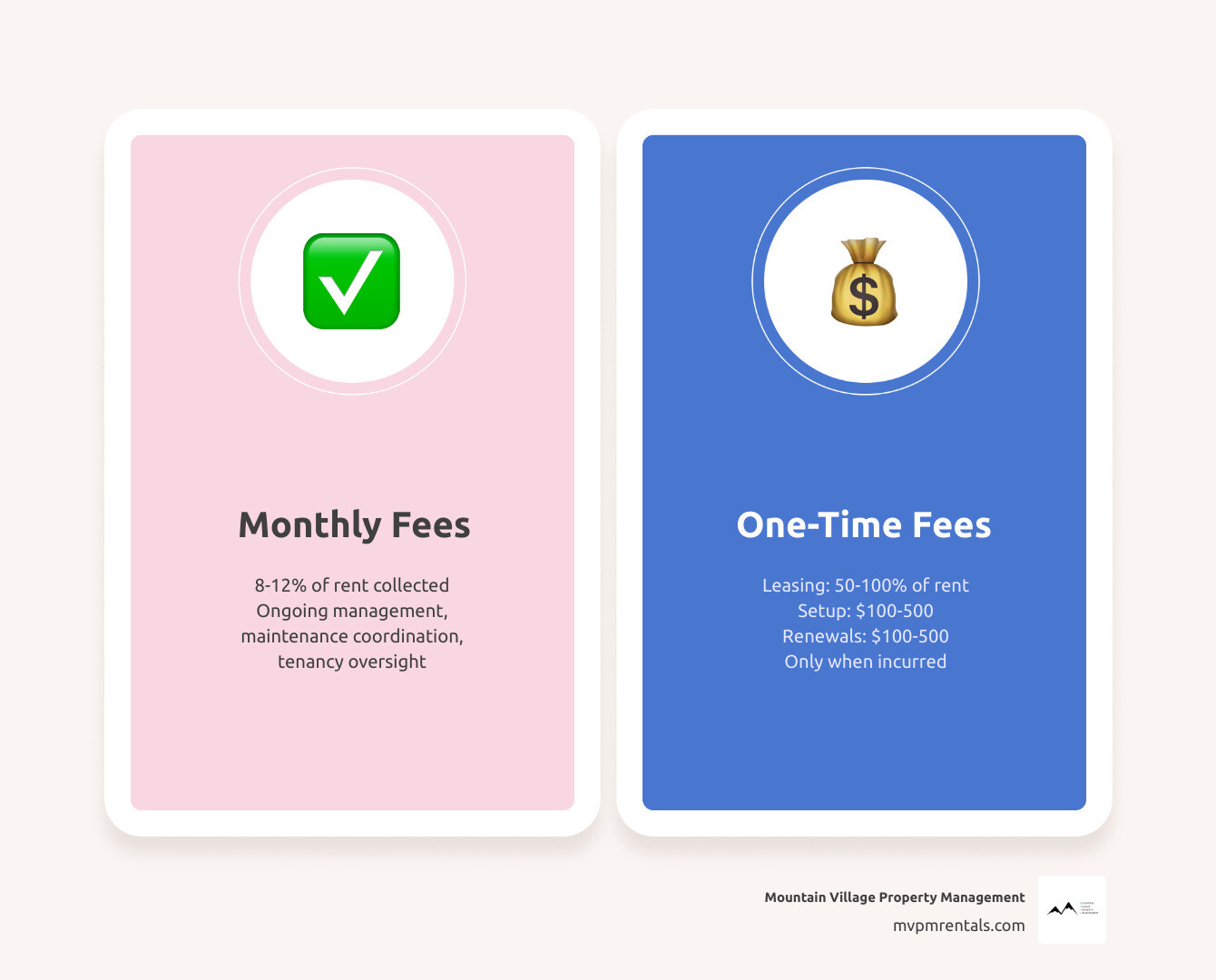
| Monthly management fee | 8%–12% of monthly rent collected |
| Tenant placement / leasing fee | 50%–100% of one month’s rent |
| Lease renewal fee | $100–$500 |
| Maintenance markup | 5%–15% of repair cost |
| Vacancy fee | $50–$150/month (if charged) |
| Eviction handling fee | $200–$1,000 + legal costs |
| Setup / onboarding fee | $100–$500 (one-time) |
The bottom line: For a property renting at $2,000/month, total annual management costs — including leasing, maintenance, and renewals — can realistically reach around $4,800, or roughly 20% of gross rental income.
These numbers vary by location, property type, and the specific company you hire. Some fees are standard. Others can be negotiated or avoided altogether. And a few can catch landlords completely off guard.
Nearly half of all rental property owners now use a professional property manager — and for good reason. But not all fee structures are created equal, and the cheapest option isn’t always the best one.
I’m Pablo Negrete, co-owner of Mountain Village Property Management (MVPM) in Bozeman, Montana. Having managed single-family homes and multi-unit properties across Southwest Montana, I’ve seen how property management cost structures can make or break an investor’s cash flow. In this guide, I’ll walk you through exactly what you’re paying for — and how to make sure you’re getting your money’s worth.
Easy property management cost word list:
- Professional property management Bozeman
- Landlord property management
- Real estate property management companies
Breaking Down the Standard Property Management Cost

When you start shopping for a manager in Bozeman or Belgrade, the first number you’ll likely hear is the monthly management fee. However, focusing solely on that percentage is like looking at the sticker price of a car without checking the fuel efficiency or insurance costs.
Most real estate property management companies use one of two primary fee structures:
- Percentage-Based Fees: This is the industry standard. Managers charge a slice of the monthly rent, typically between 8% and 12%. At Mountain Village Property Management, we keep things simple and competitive with a transparent 4.9%–8.9% management fee.
- Flat Monthly Fees: Some companies charge a fixed dollar amount, such as $100 to $300 per month, regardless of the rent price. While this can be predictable for high-rent properties, it can sometimes lead to a “set it and forget it” mentality where the manager isn’t as incentivized to push for annual rent increases.
Most property management companies charge a monthly fee that covers the day-to-day “heavy lifting”—answering tenant calls, collecting rent, and coordinating minor repairs. But as we’ll see, the “all-in” property management cost often includes several other line items.
Monthly Management Fees for Long-Term Rentals
For long-term rentals (leases of six months or more), the fee is almost always based on the gross income or rent collected. This is a crucial distinction. If a contract says the fee is based on “rent due,” you might find yourself paying the manager even if the tenant stops paying rent. Always look for “rent collected” to ensure your interests are aligned with the manager’s.
Standard Property Management services included in this fee typically involve:
- Rent collection and processing.
- Acting as the primary point of contact for tenants (no more 2 AM calls about a leaky faucet!).
- Financial reporting and monthly statements.
- Enforcing lease agreement. terms.
According to the National Association of Residential Property Managers, these fees vary based on the number of units you have. If you have a large portfolio in Butte or Three Forks, you might be able to negotiate a lower percentage than someone with a single-family home.
Short-Term vs. Long-Term Property Management Cost
If you own a vacation rental in Big Sky or a “ski-in/ski-out” condo, get ready for a different math equation. Short-term rental (STR) management is far more labor-intensive.
While long-term fees hover around 8-12%, short-term property management cost ranges from 15% to 25% of gross rental income. Why the jump?
- Guest Communication: Answering “How do I turn on the hot tub?” at midnight.
- Housekeeping Coordination: Managing “turnovers” between guests multiple times a week.
- Platform Management: Handling listings on Airbnb, VRBO, and direct booking sites.
- Supplies: Keeping the coffee pods and toilet paper stocked.
In mountain towns like ours, the higher fee is often worth it because the gross revenue of a short-term rental can be significantly higher, even after the manager takes their cut.
Additional Fees and Hidden Expenses to Watch For
If the monthly fee is the “subscription,” these additional charges are the “add-ons.” Some are necessary, while others are “hidden” costs that can sneak up on you.
Leasing Fees and Tenant Placement
The leasing fee (or tenant placement fee) is often the largest single expense in a given year. It covers the work required to find a new tenant:
- advertising cost (professional photos, listings on Zillow/AppFolio).
- tenant screening (credit checks, criminal background, and eviction history).
- move-in procedures (initial inspections and key hand-offs).
This fee usually ranges from 50% to 100% of one month’s rent. If your property in Livingston rents for $2,000, expect to pay $1,000 to $2,000 every time a tenant moves out. This is why tenant retention is the “secret sauce” of high-ROI landlording.
Maintenance and Repair Markups
Most property managers don’t have a plumber or electrician on staff. They hire third-party vendors. To cover the time spent coordinating these pros, many managers add a 5% to 15% markup to the repair bill. If a water heater repair costs $500, and the manager has a 10% markup, you’ll be billed $550.
We recommend asking about:
- The Maintenance Reserve: Most managers require you to keep a “reserve fund” (typically $250–$500) to cover emergency repairs without needing to call you for every $50 lightbulb change.
- Vendor Discounts: Some large management firms get “bulk rates” from local contractors. Ask if those savings are passed on to you or kept as part of the markup.
Lease Renewals and Eviction Handling
When a tenant decides to stay another year, the manager has to draft a new lease agreement. and perform a market rent analysis. For this, they often charge a Lease Renewal Fee, typically $100 to $500.
On the darker side of landlording are tenant evictions. If a tenant needs to be removed, the property management cost will include an eviction handling fee ($200–$1,000) plus actual legal fees and court costs. It’s a headache you want to avoid, which is why we place such a high premium on rigorous screening.
Lastly, be mindful of the “Early Termination” clause. If you break the property management contract early, you might be hit with a fee ranging from one month’s management cost to the remaining balance of the contract. At MVPM, we believe in earning your business every month, which is why we offer no set-up fee (Signature & Summit plans) and transparent exit terms.
Factors That Influence Your Total Management Investment
Not every property is priced the same. A brand-new condo in Manhattan, MT, will likely have a lower property management cost than a century-old triplex in Butte that needs constant repairs.
Type of Property and Condition
The Type of Property plays a massive role.
- Single-Family Homes: Usually the most expensive per unit because there’s no “economy of scale.”
- Multi-Family Properties: If we’re managing 10 units in one building, the fee percentage often drops because we can handle maintenance and inspections more efficiently.
- Condition: If a property is in poor condition, managers may charge more or require a higher maintenance reserve because they know they’ll be spending more time on-site.
Regional Variations in Management Pricing
While you might see 6% fees in high-rent markets like New York or California, Bozeman Montana Property Management benchmarks are slightly different. In Montana, the average range is 8-12%.
Why? Because our “high rent” is still lower than San Francisco, but our labor and travel costs (driving between Belgrade, Three Forks, and Big Sky) are significant. However, because our vacancy rates are historically low, managers can often be more efficient, passing those savings to you.
Is Professional Property Management Worth the Cost?
Many DIY landlords ask: “Can’t I just do this myself and save the 8-10%?” You certainly can. But it’s important to calculate the “cost of your time.”
If you spend 10 hours a month chasing rent, dealing with vacancies, and coordinating repairs, and your time is worth $50/hour, you’ve just “spent” $500. For many, that’s more than the management fee.
Beyond time, there’s the “Legal Protection” factor. Do you fully understand state landlord-tenant laws or Federal Fair Housing guidelines? One mistake in an eviction notice or a security deposit return can lead to a lawsuit that costs ten times more than a year of management fees.
Real estate investors on the BiggerPockets Forums often argue that a good manager is an asset, not an expense. They find better tenants, negotiate better repair rates, and keep the property occupied longer.
Calculating the Property Management Cost ROI
A professional manager’s goal is to increase your Net Operating Income (NOI). We do this through:
- Vacancy Reduction: Our marketing systems fill units faster than a “For Rent” sign in the yard.
- Tenant Retention: Happy tenants stay longer, saving you that $1,500 leasing fee.
- Market Rent Optimization: We know exactly when the Bozeman market can support a $100/month rent increase.
When you weigh the property management cost against these gains, the ROI often becomes clear. As we like to say: Don’t Get Managed, Get Empowered: Choosing the Best Property Management in Bozeman.
Frequently Asked Questions about Property Management Fees
Are property management fees tax deductible?
Yes! The IRS generally considers property management fees a necessary business expense. You can typically deduct these costs on your Schedule E when filing your taxes. According to Money Crashers, Are Property Management Companies Worth the Cost?, this tax deduction effectively “subsidizes” the cost of hiring a pro, making it even more affordable for most investors.
Should I pay fees on rent due or rent collected?
Always aim for rent collected. If your manager charges based on “rent due,” they get paid even if the property is vacant or the tenant is a “deadbeat.” Paying on “rent collected” ensures the manager only makes money when you do. This creates the ultimate “incentive alignment.”
Can I negotiate property management fees?
Absolutely. While most companies have a standard rate, you have leverage if:
- You have multiple properties (a “portfolio discount”).
- Your property is high-value (a 10% fee on a $5,000/month rental is $500—many managers will take $400).
- Your property is brand new and requires very little maintenance.
Conclusion
Understanding the true property management cost is about looking past the “8%” and seeing the big picture. Between leasing fees, maintenance reserves, and the value of your own time, the “cents” really do add up to “rent.”
At Mountain Village Property Management, we’ve built our business on being the most transparent partner in Southwest Montana. We offer:
- A flat, transparent 4.9%–8.9% management fee.
- no set-up fee (Signature & Summit plans) (we don’t get paid until you do).
- Industry-leading occupancy rates across Bozeman, Belgrade, Big Sky, and beyond.
If you’re tired of the “landlord lifestyle” and want to turn your rental into a truly passive investment, we’d love to chat. Reach out to us at admin@mvpmrentals.com.
Ready to see how we can maximize your ROI? Check out our full list of Property Management Services today.