
Understanding the Key Players in Your Rental Success
Real estate agents and managers rentals involve two distinct professionals who serve different roles in the rental property lifecycle:
| Professional | Primary Role | When You Need Them | Payment Structure |
|---|---|---|---|
| Rental Agent | One-time tenant placement | Filling a vacancy | ~1 month’s rent (one-time fee) |
| Property Manager | Ongoing property operations | Long-term management | 4-10% of monthly rent (recurring) |
If you own a rental property, you’ve likely asked: Should I hire someone to help, and if so, who? The confusion is understandable, as “rental agent” and “property manager” are often used interchangeably. However, they represent very different services with distinct costs and responsibilities.
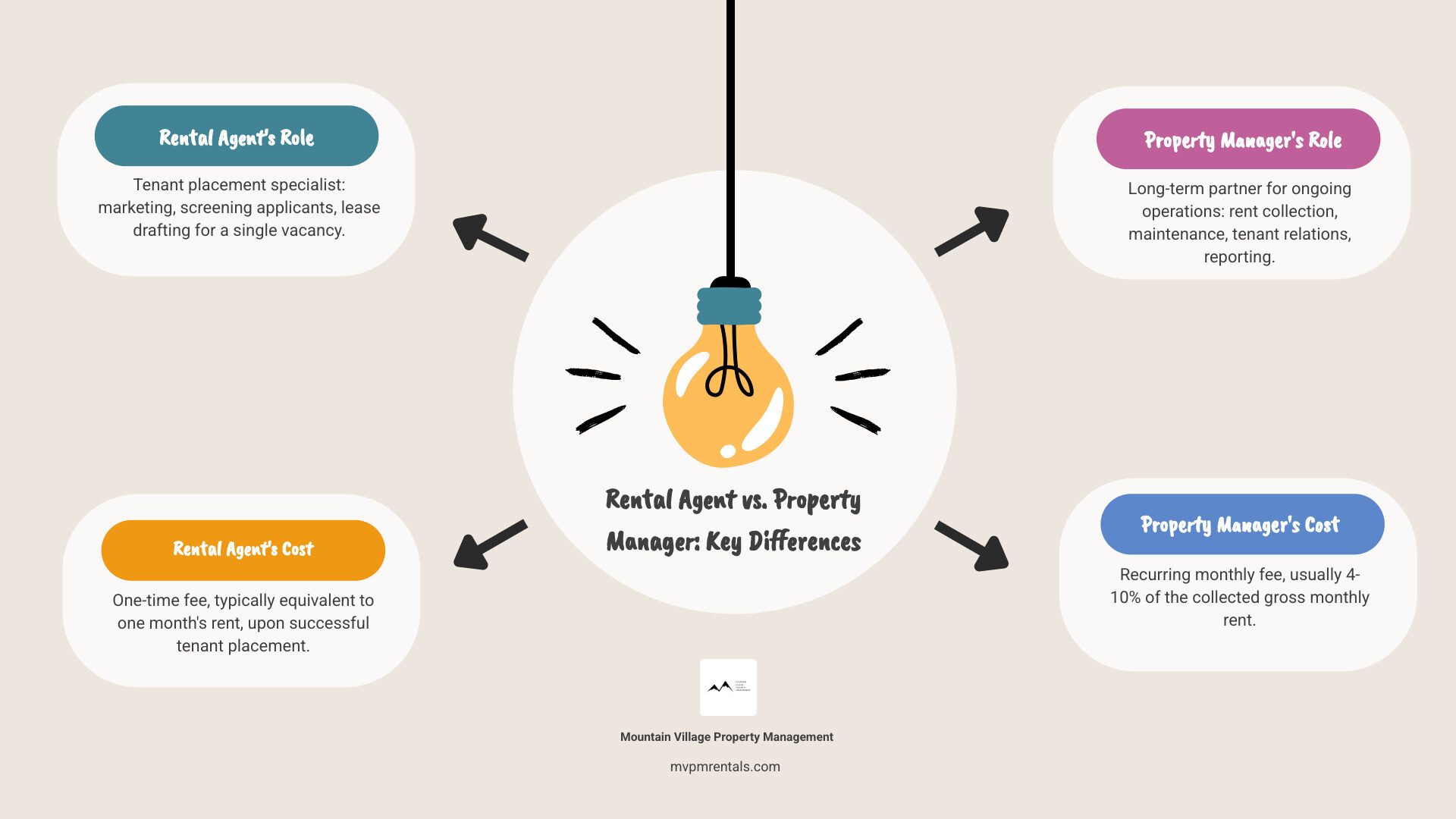
A rental agent focuses on one job: finding and placing a qualified tenant in your property. Think of them as a specialist who markets your listing, screens applicants, and gets a lease signed—then their work is done.
A property manager, on the other hand, becomes your long-term partner. They handle everything from rent collection and maintenance coordination to tenant relations and emergency repairs. According to industry data, property managers typically charge fees ranging from 4 to 10 percent of the property’s monthly gross income, while rental agents generally charge a one-time fee close to one month’s rent.
The right choice depends on your situation. Are you simply struggling to fill a vacancy, or do you need someone to handle the daily headaches of landlording? Do you live nearby or hundreds of miles away? Are you managing one property or a portfolio?
As Pablo Negrete, co-owner of Mountain Village Property Management, I’ve helped many property owners in Bozeman and Southwest Montana steer this decision. This guide clarifies the differences between real estate agents and managers rentals so you can make the best choice for your investment.
The Rental Agent: Your Tenant Placement Specialist
Imagine your rental property in Bozeman or Belgrade is sitting empty. You know the market is hot—81% of homeowners who rent or plan to rent are interested in long-term renting—but finding the right tenant is challenging. This is where a rental agent (or leasing agent) shines. Their primary goal is to fill your vacancy quickly and efficiently.
A rental agent is typically a licensed real estate agent who specializes in the leasing process. Their job is transactional: they help you find a tenant, sign a lease, and then their service concludes. They don’t stick around for the day-to-day management, but they are experts at the initial tenant acquisition phase, which can be a huge relief if you’re feeling overwhelmed.
What Services Does a Rental Agent Provide?
When you hire a rental agent, you get a dedicated marketing and screening expert. Their services attract qualified tenants and streamline the leasing process. Here’s what to expect:
- Rental Advertising: A good rental agent knows how to craft compelling ads that highlight your property’s best features. They’ll use professional photography and write descriptions that make your listing stand out. They’re also adept at syndicating listings across various platforms, ensuring maximum visibility.
- Property Showings: They handle all inquiries and coordinate property viewings. This means you don’t have to juggle your schedule to meet potential tenants. They’re flexible and can accommodate showings, including on weekends, which is crucial since 69% of prospective tenants expect to hear back from a landlord or property manager within a day of inquiring.
- Applicant Screening: This is a critical service. Rental agents are experienced at tenant screening, which often includes running credit checks, verifying employment, checking criminal history, and contacting previous landlords. This helps ensure you get responsible renters who are likely to pay rent on time and care for your property.
- Lease Drafting: They can help draft legally sound lease agreements, ensuring all essential terms and conditions are covered and compliant with local landlord-tenant laws in Montana.
- Market Analysis and Setting Rental Price: Rental agents know the local market. They can perform a comparative market analysis to help you set a competitive rental price, ensuring your property doesn’t sit vacant for too long, nor does it get rented below its true value. Their expertise can be invaluable in Bozeman, Belgrade, or any of our surrounding areas where market conditions can vary.
For more information about how we can assist with various aspects of property management, explore our Services page.
How Are Rental Agents Paid?
The payment structure for rental agents is generally straightforward and tied directly to their primary service: placing a tenant.
- One-Time Fee: This is the most common payment model. Rental agents are typically paid a one-time fee close to one month’s rent for finding a tenant. This fee covers all their efforts in marketing, showing, screening, and lease signing.
- Commission-Based: This fee is essentially a commission for a successful lease. Once the tenant signs the lease and often after they move in, the agent receives their payment.
- Flat Fee Structure: While less common, some agents might charge a flat fee for their services, regardless of the monthly rent. However, the one-month’s-rent model is prevalent across the industry.
It’s important to clarify the fee structure upfront when considering a rental agent. This ensures you understand what you’re paying for and when the payment is due.
The Property Manager: Your Long-Term Investment Partner
While a rental agent is a matchmaker, a property manager is your long-term partner. For owners in Bozeman, Livingston, or Big Sky, a property manager handles all day-to-day operations, letting you enjoy your investment without the headaches.

“Owning rental property can be a sound financial investment,” as we often say, “but it can also be extremely stressful.” This is where a property manager steps in as your long-term investment partner, handling the complexities of real estate agents and managers rentals on an ongoing basis. Their goal is to maximize your return on investment (ROI) by keeping properties occupied, well-maintained, and profitable.
Key Responsibilities of a Property Manager
A property manager’s role is comprehensive, covering all aspects of ownership after a tenant is placed. Their key responsibilities include:
- Rent Collection: Property managers handle all aspects of rent collection, ensuring timely payments. This includes sending reminders (crucial since 57% of renters want to pay online, but only 38% are given the option) and enforcing lease terms regarding late payments. We provide convenient online payment options for tenants, streamlining this process.
- Maintenance Coordination: From routine upkeep to emergency repairs, property managers manage all maintenance needs. They have a network of trusted vendors and can coordinate repairs efficiently, often at competitive prices. For us, this means ensuring your property in Gallatin Gateway or Manhattan is always in top shape.
- Emergency Repairs: Imagine a burst pipe in the middle of the night in your Butte rental. A property manager handles these emergencies, providing 24/7 support so you don’t have to drop everything.
- Tenant Relations: They act as the primary point of contact for tenants, addressing questions, concerns, and complaints. This professional buffer can save you a lot of stress and emotional involvement.
- Financial Reporting: Property managers provide detailed monthly and annual financial reports, keeping you informed about your investment’s performance, including income, expenses, and occupancy rates. This transparency is key to understanding your investment.
- Eviction Handling: While rare with proper screening, if an eviction becomes necessary, property managers understand the legal process and can steer it on your behalf, ensuring compliance with Montana’s landlord-tenant laws.
- Regular Inspections: They conduct periodic property inspections to ensure tenants are adhering to lease terms and to identify any maintenance issues early, protecting your asset in Three Forks or elsewhere.
- Legal Compliance: Landlord-tenant laws are complex and constantly evolving. Property managers stay updated on fair housing laws, eviction procedures, and other regulations, ensuring your property remains compliant and you avoid costly legal pitfalls.
Pros and Cons of Hiring a Property Manager
Deciding to hire a property manager means weighing the benefits against the costs. The right partner can transform your investment experience.
Pros:
- Time Savings: This is perhaps the biggest advantage. A property manager frees up your valuable time, allowing you to focus on other pursuits or investments. “If you own a rental property and want help, a property manager can relieve you of a whole bunch of headaches,” as one industry expert puts it.
- Stress Reduction: No more late-night calls about a leaky faucet, chasing down rent, or dealing with difficult tenant situations. We handle the daily grind, giving you peace of mind.
- Expertise and Experience: Property managers bring a wealth of experience in pricing, marketing, tenant screening, and legal compliance. Their knowledge helps optimize your rental income and minimize vacancies.
- Legal Buffer: They act as a buffer between you and your tenants, handling legal notices, disputes, and ensuring all actions comply with local and state laws.
- Higher Quality Tenants: With thorough screening processes, property managers are often better at finding reliable, long-term tenants, reducing turnover and potential damage.
- Lower Vacancy Rates: Our company prides itself on high occupancy rates, meaning your property generates income more consistently.
- Cost-Effective Maintenance: Property managers often have established relationships with contractors, securing better rates for repairs and maintenance, which can save you money in the long run.
Cons:
- Management Fees: Property managers charge a recurring fee, typically 4-10% of the monthly rent. While our management fee is a low 8% with $0 setup costs, it’s still an expense that impacts your net income.
- Less Direct Control: You hand over the day-to-day decision-making, which means you have less direct control over your property and tenant interactions. However, a good property manager will keep you informed and consult on major decisions.
- Potential for Mismanagement: As with any service, there’s a risk that a property manager might not perform as expected. This underscores the importance of vetting and clear communication. We combat this with transparent reporting and a commitment to customer service.
The decision hinges on how much hands-on involvement you desire and whether the benefits of professional management outweigh the costs for your specific situation.
Making the Choice: Agent vs. Manager for Your Real Estate Agents and Managers Rentals
Choosing between a rental agent and a property manager for your real estate agents and managers rentals portfolio depends on your needs, goals, and capacity. There’s no one-size-fits-all answer, so let’s compare them and explore some common scenarios.
| Feature | Rental Agent | Property Manager |
|---|---|---|
| Primary Service | Tenant placement, lease signing | Full-service, ongoing property operations |
| Involvement | Short-term, transactional | Long-term, partnership |
| Cost | One-time fee (~1 month’s rent) | Recurring monthly fee (4-10% of monthly rent) |
| Responsibilities | Marketing, showings, screening, lease draft | All landlord duties: rent, maintenance, tenant relations, legal, financial |
| Ideal For | Landlords needing tenant acquisition only | Landlords seeking passive income, hands-off management |
| Time Commitment | Reduces initial time spent on leasing | Greatly reduces ongoing time commitment |
The right choice often comes down to:
- Your Landlord Goals: Are you looking for a completely passive investment, or do you enjoy some aspects of hands-on management?
- Property Location: If your property is far from where you live (e.g., you own a rental in Big Sky but live in a different state), a property manager is almost essential.
- Number of Properties: Managing one property might be feasible on your own or with a rental agent. Managing multiple units, like a portfolio across Bozeman and Livingston, often necessitates a property manager.
- Your Time Commitment: How much time are you willing and able to dedicate to your rental property each week?
Deciding Between Real Estate Agents and Managers Rentals: A Scenario-Based Guide
Let’s look at a few common situations to help you determine the best path for your real estate agents and managers rentals:
- Scenario 1: First-Time Landlord: You just inherited a property in Bozeman and decided to rent it out. You’re new to this and feel overwhelmed by the legalities, tenant screening, and maintenance demands.
- Recommendation: A property manager. They can guide you through the entire process, set up proper systems, and ensure compliance, giving you peace of mind.
- Scenario 2: Out-of-State Owner: You live in California but own a ski cabin rental in Big Sky. You can’t be there to respond to tenant calls or coordinate repairs.
- Recommendation: A property manager. They provide local boots on the ground, handling everything from emergency repairs to routine inspections, ensuring your investment is cared for from afar. “If you live far from your rental property,” a guide suggests, “a property manager can be invaluable.”
- Scenario 3: Busy Professional with Multiple Units: You’re a doctor in Bozeman with a demanding schedule, managing three rental homes in Belgrade and Three Forks. You’re constantly juggling work, family, and landlord duties.
- Recommendation: A property manager. Managing multiple properties is a significant time commitment. A property manager can streamline operations, manage tenant issues across all units, and ensure consistent rent collection.
- Scenario 4: Hands-On Landlord Needing Help Finding a Tenant: You love managing your single rental property in Manhattan, handling maintenance and tenant relations yourself. However, you hate the process of marketing and screening new tenants when a vacancy occurs.
- Recommendation: A rental agent. You can hire them for the specific task of finding and placing a tenant. Once the lease is signed, you take back the reins, keeping your preferred level of involvement.
The DIY Landlord: What if You Hire Neither?
You might be thinking, “Why not do it myself?” For some landlords, self-management is a viable option. However, it’s crucial to understand the essential tasks involved. “You don’t need to be a management pro, real estate expert or professional contractor to manage a rental property,” one source notes, but it “does require time to keep up with tenant requests, rental property maintenance issues and the business of landlording.”
Here’s what DIY property management entails:
- Tenant Screening: This is paramount. You’ll need to create a thorough application process, run credit and background checks, verify employment and income, and contact previous landlords. 58% of renters prefer to apply online, so having an online application system is beneficial.
- Marketing and Advertising: You’ll be responsible for creating appealing listings, taking high-quality photos, and advertising your property on various rental platforms to attract potential tenants.
- Rent Collection Tools: You’ll need a reliable system for collecting rent. While 57% of renters want to pay online, only 38% are given the option. Providing an online payment solution can make your life easier and keep tenants happy.
- Maintenance Responsibilities: This includes everything from routine preventative maintenance (checking smoke detectors, seasonal inspections) to responding promptly to emergency repairs (like a broken furnace in the Montana winter). You’ll also need to find and manage contractors.
- Tenant Relations: You’ll be the direct point of contact for all tenant inquiries, complaints, and issues. Clear and consistent communication is key.
- Legal Knowledge: You must be well-versed in federal, state, and local landlord-tenant laws, including fair housing regulations, eviction procedures, and proper notice requirements. Ignorance of the law is no excuse and can lead to costly legal battles.
- Record Keeping and Accounting: You’ll need to diligently track all income and expenses, manage security deposits according to regulations, and prepare necessary documents for tax filing.
While platforms like Zillow Rental Manager offer tools to assist DIY landlords, managing a rental property is a significant commitment. It requires time, organization, and a solid understanding of both business and legal principles. For many owners in busy areas like Bozeman or Belgrade, the demands can quickly become overwhelming.
How to Find and Vet Qualified Professionals
Whether you choose a rental agent or a property manager, finding the right professional is paramount. A bad choice can be worse than no choice at all. We believe in transparency when selecting a partner for your real estate agents and managers rentals.
Key Questions for Vetting Real Estate Agents and Managers Rentals
When interviewing candidates, come prepared with questions. This due diligence helps you assess their expertise, reliability, and compatibility.
- Experience Level: “How long have you been providing property management services?” is a great starting point. Ask about their experience with your specific type of property (e.g., single-family homes, condos, multi-family units) and in your local market (Bozeman, Livingston, etc.).
- Occupancy Rates: For property managers, ask about their typical occupancy rate. A good property management company should ideally have a 92% to 95% occupancy rate. Anything below 90% in peak seasons could be a red flag.
- Fee Structure: Get a clear, itemized breakdown of all fees. This includes the initial tenant placement fee (for agents or PMs), ongoing management fees (for PMs – ours is a low 8% with $0 setup costs!), lease renewal fees, and any other potential charges like maintenance markups. Ensure there are no hidden costs.
- Tenant Screening Process: How do they find and vet tenants? What steps do they take to ensure responsible renters? This should include credit checks, background checks, employment verification, and reference checks.
- Maintenance Procedures: For property managers, how do they handle routine maintenance and emergency repairs? Do they have an in-house team or a network of trusted contractors? What’s their response time for emergencies?
- Communication Style: How often will they communicate with you? What kind of reports will you receive? How quickly do they respond to your inquiries? Communication is key to a successful partnership.
- Legal Compliance: How do they stay updated on local landlord-tenant laws and fair housing regulations? This is crucial for protecting you from legal issues.
- References: Ask for references from current clients. A great way to find reputable professionals is to search directories from organizations like the National Association of Residential Property Managers (NARPM), as their members adhere to a strict code of ethics.
Don’t hesitate to ask us your questions! We’re always ready to discuss our processes and how we can best serve your investment goals. You can reach out through our Property Owner Contact Form.
Understanding Legal and Ethical Obligations
The legal landscape for rentals is complex. Both rental agents and property managers have significant legal and ethical obligations, as do you as the landlord, to ensure the property is managed correctly.
- Fair Housing Laws: All professionals involved in real estate agents and managers rentals must comply with federal and state fair housing laws, which prohibit discrimination based on race, color, religion, sex, national origin, familial status, and disability.
- Local Regulations: Beyond federal and state laws, there are specific local regulations in Bozeman, Belgrade, Livingston, and other areas that govern rental properties. These can include rules about security deposits, lease terms, and eviction processes.
- Tenant Rights: Tenants have specific rights, including the right to a safe and habitable living environment, privacy, and proper notice before entry. Professionals must respect and uphold these rights.
- Eviction Procedures: If an eviction becomes necessary, it must follow strict legal procedures. Any deviation can lead to costly legal battles and delays.
- Human Rights and Rental Housing Legal Considerations: It’s important to be aware of the legal guidelines for rejecting tenants—there are only a small number of reasons for which it is okay to say “no” to an applicant.
When vetting professionals, ensure they demonstrate a strong understanding of these obligations. A reputable property manager will always prioritize legal compliance to protect both you and your tenants.
Frequently Asked Questions about Real Estate Agents and Managers for Rentals
What’s the main difference in how rental agents and property managers are paid?
A rental agent typically charges a one-time fee, often equivalent to one month’s rent, for placing a tenant. This fee covers their services up to the point of lease signing. A property manager charges a recurring monthly fee, usually 4-10% of the collected rent, for ongoing management of the property and tenant. This monthly fee covers services like rent collection, maintenance coordination, tenant relations, and financial reporting. For example, our company offers a low 8% management fee with $0 setup costs.
Can a real estate agent also be a property manager?
Yes, some licensed real estate agents also offer property management services. However, their primary focus is often on transactions (buying/selling/leasing). A dedicated property manager or management company specializes in the day-to-day, long-term operations of rental properties. While a real estate agent might help you find a tenant (rental agent role), they may not offer the comprehensive, ongoing management services that a specialized property management firm does. It’s crucial to clarify the scope of services if you’re working with an agent who claims to do both.
What are the biggest red flags when hiring a property manager?
Major red flags include unclear or complex fee structures that make it difficult to understand what you’re paying for, an inability to provide references from current clients, poor communication (e.g., not responding to calls or emails promptly), a lack of knowledge about local landlord-tenant laws specific to areas like Bozeman or Livingston, and an unusually low management fee, which could indicate hidden costs or subpar service. Additionally, be wary if they avoid in-person meetings, don’t provide invoices for expenses, or don’t disclose all income sources. Always trust your instincts.
Conclusion
Navigating real estate agents and managers rentals doesn’t have to be confusing. The key takeaway is that these two professionals, while sometimes overlapping, serve fundamentally different purposes in the rental property journey.
- A rental agent is your specialist for tenant placement. They excel at marketing your property, screening applicants, and securing a lease, concluding their service once a tenant is in place.
- A property manager is your long-term partner, handling the full spectrum of day-to-day operations. From rent collection and maintenance to tenant relations and legal compliance, they manage your investment so you don’t have to.
The best choice for you hinges on your individual needs and goals. If you’re a hands-on landlord who simply needs help finding a qualified tenant, a rental agent might be your answer. However, if you’re looking for a truly passive investment, want to minimize stress, or own multiple properties across areas like Bozeman, Belgrade, or Big Sky, a full-service property manager offers invaluable expertise and peace of mind.
At Mountain Village Property Management, we pride ourselves on providing full-service solutions that maximize your investment with a low 8% management fee, $0 setup costs, and high occupancy rates. We believe in hassle-free management, allowing you to enjoy the benefits of property ownership without the burdens.
Ready to take the next step in maximizing your rental investment? Learn more about our Property Management services and find how we can help you achieve your goals.