
Why Finding Quality Tenants is Your Best Investment
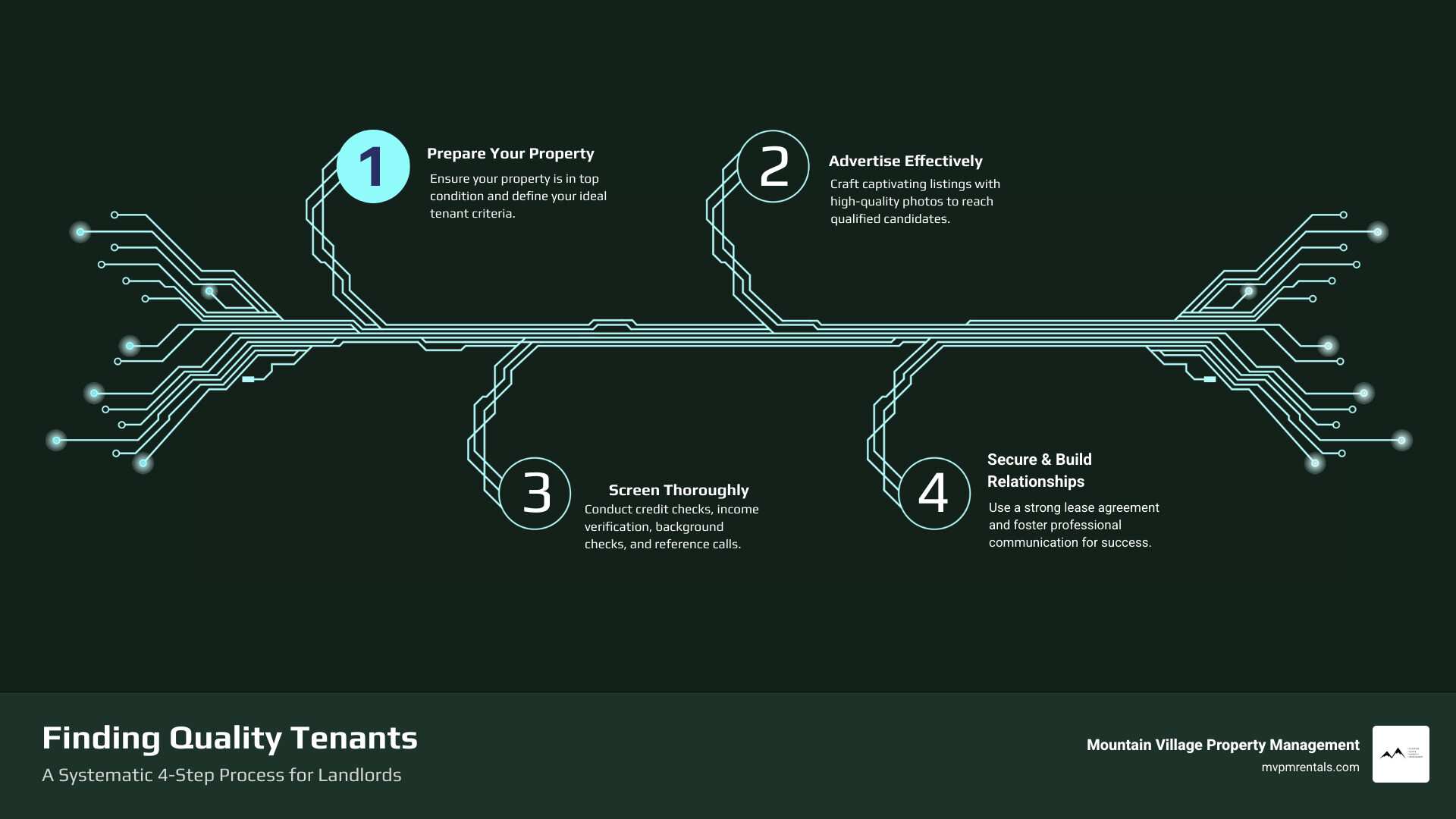
Finding quality tenants starts with three essential steps: prepare your property, advertise effectively, and screen thoroughly. A quality tenant pays rent on time, cares for your property, and communicates professionally—saving you thousands in repairs and lost income.
As a landlord, you know the stakes are high. A bad tenant can lead to property damage, eviction costs, legal fees, and months of lost income.
The good news? Properly screening tenants is the most effective preventative measure you can take. It’s not about luck—it’s about having a systematic process that protects your investment.
This guide covers the four key stages of finding reliable renters: preparing your property, advertising, screening, and building a professional relationship. You’ll learn what to look for in applications, how to verify financial stability, and which red flags to watch for.
I’m Pablo Negrete, co-owner of Mountain Village Property Management in Bozeman, Montana. We’ve maintained a 98% occupancy rate by mastering systematic screening and professional property presentation. I’m sharing the same strategies we use to protect our clients’ investments across Southwest Montana.
Step 1: Prepare Your Property and Define Your Ideal Tenant
Before you advertise, the most crucial step in finding quality tenants is preparing your property. A high-calibre property naturally attracts high-calibre tenants.

Property condition is paramount. Regular inspections prevent major problems and save money. We ensure every unit is safe, with functioning appliances and sound plumbing and electrical systems.
Curb appeal matters. A well-maintained exterior signals a responsible landlord. Inside, cleanliness is non-negotiable. A spotless home helps renters envision themselves living there.
Equally important is defining tenant criteria. This is your blueprint for the ideal renter:
- Income requirements: We require a verifiable income of at least three times the monthly rent to ensure affordability.
- Pet policies: State your rules on pets, including types, fees, or deposits, to manage expectations.
- Smoking rules: A no-smoking policy helps maintain property condition.
- Lease duration: Specify your desired lease term (e.g., 6 or 12 months) to target the right applicants.
We look for financially stable, respectful tenants with a history of on-time payments. These are the qualities of a quality tenant that protect your investment.
What High-Caliber Tenants Look For
High-calibre tenants are discerning and look for a home that offers value for money. They prioritize:
- Safety: A secure property with working locks and good lighting.
- Modern design: Updated layouts, fresh paint, and modern fixtures.
- Updated appliances: Modern, energy-efficient appliances are a big draw.
- Quality flooring: New, clean flooring makes a huge difference.
Focusing on these aspects attracts desirable renters who are more likely to stay long-term and respect the property. Providing a great place to live fosters a reciprocal relationship.
If you’re looking for guidance on what tenants expect and how to keep them happy, you can find More info about our tenant services.
Setting Your Rental Price
Once your property is ready and criteria are set, determining the right rental price is a strategic decision that impacts applicant quality.
Market research is key. We check listings in Bozeman, Belgrade, Butte, and other local areas to set a competitive price. Our focus is on the local Montana market to ensure our prices are fair and attractive.
Our pricing should reflect the property’s value to attract A-type customers. Sometimes, a slight rent increase paired with improvements can attract more responsible tenants.
Highlighting amenities like a gourmet kitchen, a Jacuzzi tub, or bundled utilities can justify the rent and add value for renters.
Step 2: Cast a Wide Net with Effective Advertising
With your property prepared and priced, it’s time to advertise. Effective advertising creates a compelling narrative that reaches your ideal tenant.

Crafting captivating listings starts with professional, high-quality photos. Bright, clear images are essential to grab attention.
Beyond visuals, detailed descriptions are crucial. Paint a picture of life in the home by highlighting local amenities in Bozeman and surrounding areas. Clearly outlining policies on rent, pets, and smoking upfront saves time by attracting suitable applicants.
Targeted advertising means using online rental platforms, social media, and local advertising channels to reach ideal tenants and ensure maximum visibility.
Showcasing unique selling points attracts tenants looking for a quality home. This is vital for finding quality tenants efficiently.
For assistance with advertising your rental property, explore More info about our services.
Step 3: The Ultimate Guide to Finding Quality Tenants Through Screening
The screening process is the heart of finding quality tenants. It protects your investment and minimizes risk. A thorough screening is the best preventative measure against late payments, property damage, and evictions.
The Comprehensive Tenant Screening Process
Our systematic screening process includes several key stages:
-
Rental applications: Applications are the starting point, gathering contact info, residence and employment history, and authorization for credit and background checks.
-
Pre-screening questions: Pre-screening questions via phone or email help filter applicants early. We ask about their work, rental history, and reason for moving to gauge their seriousness and communication style. A non-responsive applicant may not be a good fit.
-
In-person meetings: In-person meetings during showings are invaluable for asking questions and observing demeanor. Trust your instincts; if something feels off, investigate further.
-
Verifying information: Verify all information on the application, including income, employment, and rental history.
-
Consistency: Apply screening criteria consistently to all applicants to ensure fairness and comply with fair housing laws.
How to Verify Financial Stability and Income
Financial stability is key to ensuring tenants can pay rent on time.
Income verification is a critical step. We require verifiable income of at least three times the monthly rent. Request recent pay stubs, bank statements, or an employer letter. For self-employed applicants, use tax returns to estimate take-home pay.
Credit checks are also important. A credit report details an applicant’s financial habits, payment history, and debts. Look for a consistent record of on-time payments.
Regarding credit score benchmarks:
- A score of 670 and above is generally considered good to excellent and indicates a low-risk tenant.
- Scores between 580-669 are considered fair. These applicants might require further investigation or a co-signer.
- Anything below 580 is typically considered high-risk and is a significant red flag.
However, we always consider the whole financial picture, not just the score. For instance, a lower score due to medical debt might be viewed differently than a history of missed payments. We also assess their debt-to-income ratio.
Our partners, such as FrontLobby, offer comprehensive tenant screening services that include detailed credit checks and other reports, making this process more efficient. You can explore their services here: Sign up Being a first-time Landlord is tough. Overall, the best way to ensure that you find the best Tenants every time is by developing a great Tenant Screening strategy. At FrontLobby, we offerTenant Screening servicesfor Landlords and Property Managers such as Tenant Credit Checks that include Long-Form … and Sign up Now that you know how to find good Tenants that will respect your property, it’s time to get startedwithrenting!All it takes is one bad experience to ruin the profitability of your investment. FrontLobby makes it easy for you to find quality Tenants. We also have a wide range of tools and resources ….
The Importance of Background Checks and Rental History
An applicant’s past behavior as a tenant is a key predictor of future behavior.
Criminal background checks help ensure safety. While a clean record is ideal, focus on felony charges and recent convictions, using your judgment while following legal guidelines.
Eviction history is a major red flag. A national eviction check gives a comprehensive view. While recent evictions are a deal-breaker, a single, older eviction might be acceptable if their recent history is strong.
Contacting previous landlords provides honest feedback. Prior landlords are often more truthful than current ones. To verify they are legitimate, you might ask about an available unit before mentioning the prospective tenant.
Here’s a list of questions we ask references:
- Can you confirm that [Applicant Name] rented from you?
- Did they pay rent on time, every time?
- Did they cause any damage to the property beyond normal wear and tear?
- Were they disruptive to neighbors?
- Did they give proper notice before moving out?
- Would you rent to this tenant again? If yes, why? If no, why not?
Finally, verifying employment confirms the applicant’s income and job stability. We contact employers to confirm their job title, salary, and length of employment.
Legal Compliance and Fair Housing Laws
Landlords must uphold fair housing laws during screening. Compliance protects you from lawsuits and ensures ethical treatment of all applicants.
The Fair Housing Act prohibits discrimination based on race, color, national origin, religion, sex, familial status, or disability. In Montana, we also ensure compliance with any state or local laws that may add further protections.
Avoiding discrimination is paramount. Apply screening criteria consistently to every applicant. Base decisions on objective criteria like income and credit history, not on protected characteristics. Avoid asking questions about protected classes.
Documenting decisions is a best practice. If an applicant is denied, keep clear records of the non-discriminatory reasons for the denial. This evidence is crucial if a dispute arises. For comprehensive information on fair housing, you can refer to the official HUD website: Complying with fair housing laws.
Recognizing Red Flags in Your Search for Finding Quality Tenants
Even with thorough screening, watch for red flags that indicate high-risk tenants. Recognizing these signs early saves future headaches.
Here are some common red flags we look out for:
- Inconsistent information: Discrepancies between the application and verification are major warning signs.
- Rushing to move: An applicant in an extreme hurry to move might be escaping an eviction or other problem.
- Reluctance to provide information: Hesitation to provide necessary documents like pay stubs or references suggests they may have something to hide.
- Poor references: Vague or negative references from any source are a concern.
- Eviction records: As mentioned, recent eviction records are a strong indicator of past problems.
- Asking for reductions: Asking for rent reductions before approval can signal financial instability.
- Unhappy with current job: Dissatisfaction with their current employment could indicate job instability.
- Lack of financial planning: A lack of a solid financial plan suggests they might struggle with rent.
Trust your gut instincts. If something feels off, it usually is. It’s often best to politely decline high-risk applications.
When to Request a Co-Signer or Guarantor
For promising applicants who don’t fully meet financial criteria, requesting a co-signer or guarantor can mitigate risk.
We typically consider a co-signer in situations such as:
- Low credit score: For an applicant with a credit score in the “fair” range (580-669), a co-signer provides financial backing.
- No credit history: Common for students or first-time renters, a guarantor can step in when there’s no credit history to assess.
- Insufficient income: If an applicant’s income is slightly below our 3x rent benchmark, a co-signer can bridge the gap.
- Students: A guarantor is often standard for students in Bozeman who lack rental or credit history.
A co-signer or guarantor legally agrees to be responsible for the rent and damages if the tenant defaults. This provides an additional layer of financial security. We screen co-signers just as thoroughly as we would a primary tenant.
Step 4: Secure Your Investment and Build a Positive Relationship
After selecting your ideal tenant, the final stage is to formalize the agreement and build a positive landlord-tenant relationship. This step secures your investment and ensures a harmonious arrangement.
Crafting a Strong Lease Agreement
The lease agreement is a legally binding contract that protects both parties and prevents future disputes.
Here are the key components we always ensure are included:
- Clear terms: Lease duration, rent amount, due dates, and grace periods.
- Rent payment policy: How and where to pay rent, plus any penalties for late payments.
- Maintenance responsibilities: Who is responsible for specific repairs and maintenance tasks.
- Pet addendum: If pets are allowed, an addendum detailing rules, fees, and permitted types/sizes.
- Guest policy: Guidelines on how long guests can stay.
- Legal clauses: Clauses on property access, termination, security deposits, and adherence to local laws.
A comprehensive lease agreement leaves no room for ambiguity, ensuring both parties understand their rights and responsibilities.
How to Build a Professional Landlord-Tenant Relationship
A positive landlord-tenant relationship is built on trust, respect, and clear communication.
- Professionalism: Always maintain a professional demeanor and treat tenants with respect.
- Prompt responses to repairs: Addressing maintenance requests quickly shows tenants you care and builds goodwill.
- Setting expectations: Reiterate key aspects of the lease to ensure expectations are aligned.
- Mutual respect: Fostering an environment where tenants feel heard can lead to longer tenancies. Proactive check-ins can strengthen this bond.
Investing in this relationship encourages tenants to become long-term occupants who care for their home.
Frequently Asked Questions about Finding Quality Tenants
What are the most common mistakes landlords make when trying to find good tenants?
We’ve seen landlords make several common mistakes that can lead to tenant troubles:
- Rushing the process: Trying to fill a vacancy too quickly often leads to cutting corners on screening and ending up with a problematic tenant.
- Skipping reference checks: Not contacting previous landlords is a missed opportunity for crucial insights.
- Inconsistent screening: Failing to apply the same criteria to every applicant can lead to accusations of discrimination.
- Ignoring red flags: Overlooking warning signs like inconsistent information or a rushed move-in request can have serious consequences.
- Having a weak lease agreement: A vague lease leaves too much open to interpretation, leading to disputes.
How do I legally deny a rental applicant?
Denying an applicant legally requires careful handling to avoid discrimination claims. Follow these best practices:
- Provide written notice: It’s best to decline in writing (e.g., email) to keep a record.
- Avoid specific discriminatory reasons: Do not state reasons related to protected characteristics (race, religion, etc.).
- State the property was rented to another qualified applicant: A common and legally safe reason is to state that the property has been rented to another qualified applicant.
- Keep records: Maintain detailed records of your screening process and the objective reasons for denial.
If the denial is based on information from a credit or background report, you have obligations under the Fair Credit Reporting Act (FCRA) to provide an “adverse action notice.”
What credit score is considered “good enough” for a tenant?
While there’s no single perfect number, we generally use these guidelines:
- 670+ is good: A credit score of 670+ is considered good to excellent, indicating a responsible applicant.
- 580-669 is fair: Scores in this range are fair and may require more investigation, a co-signer, or a higher security deposit.
- Below 580 is high-risk: A score below 580 is generally considered poor and indicates a high-risk applicant.
We consider the whole financial picture, not just the score. Analyze the credit report for trends, outstanding debts, and any debts owed to former landlords, which are significant red flags.
Conclusion
Finding quality tenants is not a matter of luck; it’s the result of a systematic, diligent, and legally compliant process. By preparing your property, advertising strategically, screening thoroughly, and building positive relationships, you can significantly reduce stress and protect your investment. Every step, from defining your ideal renter to crafting a strong lease, is crucial for securing reliable occupants who will treat your property with respect and pay rent on time.
For landlords in Bozeman, Belgrade, Butte, Livingston, Big Sky, Gallatin Gateway, Three Forks, and Manhattan, Montana, who prefer a hassle-free approach, our team at Mountain Village Property Management is here to help. We apply these proven strategies every day to maximize rental income for our clients with a transparent 4.9%–8.9% management fee, no set-up fee (Signature & Summit plans), and high occupancy rates. Let us take the guesswork out of finding quality tenants for you.
To learn more about how we can help manage your rental property, visit our Full-service Property Management page.