
Why Landlord Property Management Matters for Your Investment
Landlord property management is the process of overseeing rental properties, from finding tenants to collecting rent and handling maintenance. Property owners face a critical choice:
- Self-Manage: Handle all tasks directly, maintaining complete control but investing significant time and effort.
- Hire a Property Manager: Delegate daily operations to professionals for a fee, gaining expertise and freeing up time.
Successfully managing a rental property requires balancing multiple roles. While you don’t need to be a professional contractor, it does require time to handle tenant requests, maintenance, and the business of landlording.
The stakes are real: 81% of homeowners who rent their property are interested in long-term renting, meaning stable tenants want well-managed properties. Meanwhile, 58% of renters prefer to apply online and 57% want to pay rent online, but only 38% are given the option. Modern management means meeting these expectations to protect your investment.
Whether you manage your Bozeman-area rental yourself or partner with professionals, understanding the responsibilities is essential. The wrong approach can lead to costly vacancies, legal disputes, and maintenance disasters.
I’m Pablo Negrete, co-owner of Mountain Village Property Management. We specialize in full-service landlord property management in Southwest Montana, maintaining a 98% occupancy rate. I’ve seen how the right management approach—whether self-directed or professional—transforms a stressful investment into a reliable income stream.
The Self-Managing Landlord: Roles and Responsibilities
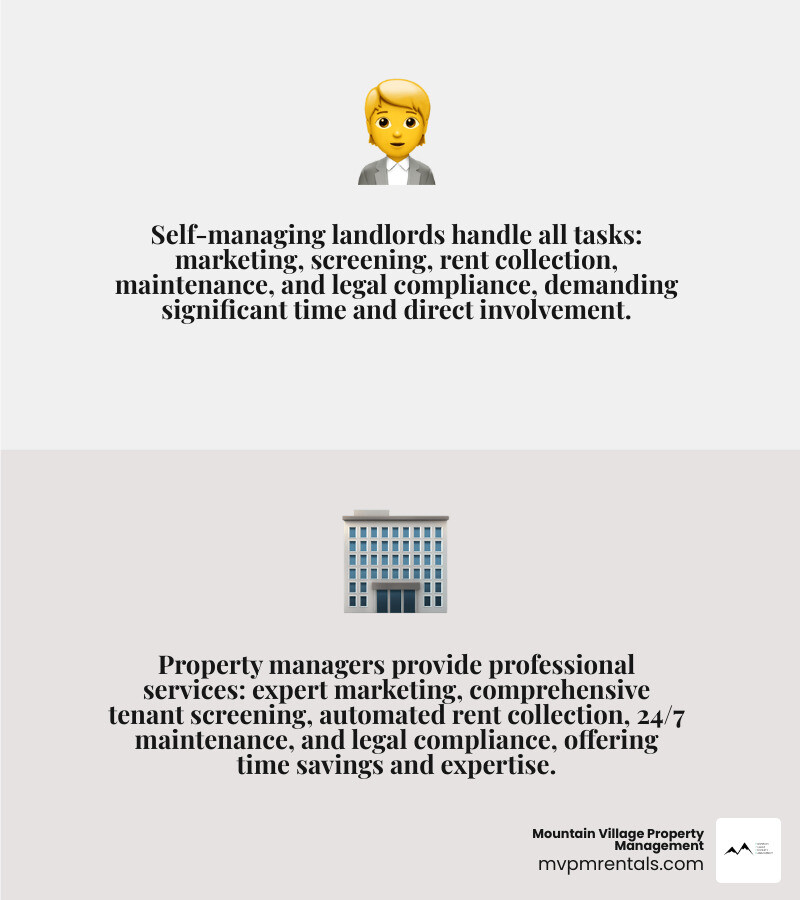
Choosing to be a self-managing landlord means taking a hands-on approach. This path offers complete control and potentially higher profit margins by avoiding management fees. However, it also means embracing responsibilities that demand significant time, knowledge, and resilience.

Key tasks in self-managed property ownership
As a self-managing landlord, you wear many hats. Here are the primary responsibilities:
1. Finding and Screening Tenants: You must market your property effectively to attract renters. Thorough tenant screening is crucial to find reliable, long-term renters. This involves:
- Credit Checks: To assess financial responsibility.
- Background Checks: To review criminal history and past evictions.
- Income Verification: Ensuring tenants can afford the rent, often using the “3X rule” (monthly income is three times the rent).
- Rental History: Contacting previous landlords to verify payment habits and property care.
2. Crafting a Solid Lease Agreement: A legally sound lease protects your investment and the tenant’s rights. Essential clauses include rent terms, security deposit details, maintenance responsibilities, and policies on pets or smoking. Using lawyer-reviewed, state-specific lease agreements is highly recommended.
3. Efficient Rent Collection: Offering convenient online payment methods can significantly improve on-time payments, as 57% of renters want to pay rent online. You’ll also need a clear policy for handling late payments.
4. Property Maintenance and Repairs: You are responsible for all maintenance, from routine upkeep to emergency fixes like a broken furnace in winter.
5. Financial Record-Keeping: Meticulous records of all income and expenses are essential for assessing profitability and for tax purposes.
6. Ensuring Legal Compliance: You are bound by numerous federal, state, and local laws covering fair housing, security deposits, and eviction procedures. Staying compliant is a continuous task.
Common challenges for the self-managing landlord
Self-managing a rental, especially in Montana’s challenging climate, comes with problems:
- Tenant Turnover: Vacancies mean lost income. Minimizing turnover requires good tenant relationships and prompt service.
- Late Rent Payments: Chasing late rent is stressful and disrupts cash flow.
- 24/7 Availability: Emergencies don’t follow a 9-to-5 schedule. You are the point of contact, day or night.
- Maintenance Emergencies: A burst pipe in a Bozeman winter requires a rapid response. Finding reliable help quickly can be difficult without a network of vetted contractors.
- Legal Disputes: Navigating landlord-tenant laws is complex. Legal missteps are costly and time-consuming.
- Emotional Stress: The constant demands, potential conflicts, and financial risks can take a significant toll.
The Professional Alternative: What a Property Manager Does
For many owners, the volume of tasks and stress of self-management is overwhelming. A professional property manager offers an alternative, acting as an intermediary and bringing expertise to the table. This allows you to enjoy the benefits of your investment without the burdens.

Core Services of a Property Management Company
A dedicated property management company like Mountain Village Property Management provides a comprehensive suite of services to handle every aspect of your rental.
- Marketing and Advertising Vacancies: We maximize your property’s exposure with professional marketing and competitive pricing on top rental sites to reduce vacancy times.
- Comprehensive Tenant Screening: Our detailed screening process—including background, credit, rental history, and income checks—places qualified, responsible tenants.
- Lease Execution and Enforcement: We handle the entire leasing process, from preparing state-specific, lawyer-reviewed agreements to enforcing all lease terms.
- Timely Rent Collection: We streamline rent collection with online payment options, which 57% of renters prefer. We handle reminders, late fees, and owner payouts efficiently.
- Handling All Tenant Communication: We are the primary point of contact for tenants, available 24/7 for emergencies and ensuring prompt, professional responses.
- Coordinating Maintenance and Repairs: We manage all property maintenance, using our network of trusted local contractors in the Bozeman area to ensure quality work at fair prices.
- Financial Reporting: We provide transparent, detailed financial statements, simplifying tax preparation and giving you a clear overview of your investment’s performance.
- Ensuring Legal Compliance: We stay updated on all federal, state, and local landlord-tenant laws in Montana, protecting you from potential legal pitfalls.
For a deeper dive into how we can simplify your life as a property owner, explore More info about our services.
The fundamental difference between a landlord and a property manager
The core distinction boils down to ownership, responsibility, and operational roles.
- Property Ownership vs. Hired Service: A landlord owns the property. A property manager is a professional hired by the owner to manage it.
- Direct vs. Indirect Tenant Interaction: A self-managing landlord interacts directly with tenants. A property manager acts as an intermediary, handling all communication.
- Ultimate Financial Responsibility: The landlord retains ultimate financial responsibility for the property (mortgage, taxes), while the manager handles operational finances.
- Legal Liability: A property manager takes on significant operational legal liability, ensuring compliance with landlord-tenant laws. The landlord remains ultimately responsible for the property itself.
- Decision-Making Authority: A self-managing landlord makes all decisions. With a property manager, you delegate operational decisions while retaining strategic control.
Self-Management vs. Professional Management: A Head-to-Head Comparison
Choosing between self-management and hiring a professional is a pivotal decision. It’s an evaluation of your financial investment, time investment, and return on investment (ROI).
| Feature | Self-Management | Professional Management (e.g., MVPM) |
|---|---|---|
| Cost | No management fees; direct expenses (advertising, repairs, legal) | Management fees (e.g., 8% with MVPM); potential savings on maintenance/vacancy |
| Time Commitment | High: 24/7 availability, hands-on tasks, problem-solving | Low: Delegated tasks, minimal direct involvement |
| Control | Complete control over all decisions | Strategic control retained; operational control delegated to experts |
| Expertise | Requires personal learning and staying updated | Access to industry knowledge, legal compliance, market insights |
| Stress Level | Potentially high (emergencies, difficult tenants) | Significantly lower; peace of mind |
Advantages and Disadvantages of Self-Management
Managing your own property offers distinct benefits, but it’s crucial to be aware of the trade-offs.
Pros of Self-Management:
- Complete Control: You make every decision, from tenant selection to rental rates.
- No Management Fees: You save the percentage of rent that would go to a property manager, increasing immediate cash flow.
- Direct Tenant Relationships: Building direct rapport with tenants can be a positive experience.
Cons of Self-Management:
- Time-Consuming: Management is a demanding job requiring constant attention that can feel like a second full-time job.
- Legal Risks: Navigating complex landlord-tenant laws in Montana can be a minefield, and mistakes lead to costly lawsuits.
- Handling Emergencies: Being on call 24/7 for emergencies in Bozeman, Belgrade, or Butte is disruptive and stressful.
- Potential for High Stress: The emotional toll of difficult tenants, property damage, and legal issues can be significant.
Advantages and Disadvantages of Hiring a Professional
Hiring a property management company is about leveraging expertise and freeing up your time.
Pros of Hiring a Professional:
- Saves Time and Reduces Stress: We handle daily operations and emergencies, giving you a passive income stream.
- Expert Knowledge and Compliance: We stay updated on local laws and market trends in areas like Bozeman and Livingston, ensuring compliance and optimal pricing.
- Quality Tenants and Lower Vacancy Rates: Our rigorous screening and effective marketing attract and retain high-quality tenants, minimizing costly vacancies.
- Efficient Maintenance and Vendor Network: We have established relationships with reliable contractors in the Gallatin Valley for timely, cost-effective repairs.
- Financial Reporting: We provide clear financial statements, simplifying your accounting and tax preparation.
Cons of Hiring a Professional:
- Management Fees: The primary cost is a percentage of your rental income. Our low 8% fee is an investment that often pays for itself through reduced vacancies and avoided legal issues.
- Less Direct Control: You delegate operational decisions, which means you are not involved in every minor detail.
- Communication Can Be Indirect: Your primary contact is the property manager, not the tenant. It’s important to choose a company that prioritizes transparent communication.
Essential Best Practices for Landlord Property Management
Whether you manage your property yourself or hire a professional, adopting best practices is key to maximizing your investment, ensuring tenant satisfaction, and protecting yourself legally.
Efficient Rent Collection and Financial Record-Keeping
Effective financial management is the backbone of a profitable rental property.
- Online Payment Options: With 57% of renters wanting to pay rent online, this option is a necessity. Platforms with auto-pay and automated reminders can nearly eliminate late payments.
- Automated Reminders and Late Fee Policies: Clear, automated reminders and a consistently enforced late fee policy are crucial.
- Using Digital Accounting Tools: Use a rental accounting tool to log every expense, rental payment, and security deposit for a clear financial picture.
- Tracking Income and Expenses: Meticulous record-keeping is vital for understanding your profitability and making informed decisions.
- Tax Deductions: Detailed financial records are essential for identifying all eligible tax deductions, such as mortgage interest, property taxes, and repairs. Consult an accountant to maximize these benefits.
Proactive Property Maintenance and Tenant Communication
A well-maintained property and happy tenants go hand-in-hand, especially in Montana’s climate.
- Routine Inspections: Regular inspections are essential to catch small issues before they become expensive repairs.
- Seasonal Maintenance Plan: A proactive maintenance plan, like checking heating systems in the fall, can prevent emergencies.
- Emergency Repair Protocol: Establish a clear protocol for emergencies. Tenants should know who to call via a 24/7 line and what constitutes an emergency (e.g., burst pipe, loss of heat). Have a list of pre-vetted contractors ready.
- Clear Communication Channels: Use an online portal or direct email/text for non-urgent requests to create a documented record.
- Responding Promptly to Requests: Promptly addressing tenant concerns builds trust and prevents issues from escalating.
- Documenting All Interactions: Keep detailed records of all communication with tenants, including maintenance requests and actions taken, for your protection.
The legal side of landlord property management
Navigating the legal landscape is often the most daunting task for owners. Ignorance of the law is no excuse, and mistakes are costly.
- Fair Housing Act: Understand and adhere to federal and state fair housing laws, which prohibit discrimination. You can learn more at the U.S. Department of Housing and Urban Development (HUD).
- Habitability Standards: You are legally obligated to provide a safe and habitable living environment with essential services.
- Security Deposit Laws: Montana has specific laws regarding security deposits, including limits and the timeline for return.
- Eviction Procedures: Eviction is a legal process that must be followed precisely according to Montana law to avoid challenges.
- Staying Updated on Local Landlord-Tenant Laws: Laws can change. Familiarize yourself with local laws in Bozeman, Belgrade, etc., to ensure compliance.
- Importance of Documentation: Meticulous records of leases, inspections, finances, and communications are your best legal defense.
Making the Decision: When to Hire a Professional
The decision to hire a property management company often comes down to a few key factors. Here are some scenarios where landlords realize the value of professional help:
- Considering Your Portfolio Size: If you own multiple properties or plan to expand, the time commitment can become unsustainable. Managing multiple leases and tenants is a job for a dedicated team.
- Living Far From Your Property: If your rental is in Bozeman but you live elsewhere, managing it yourself is challenging. We can be your local eyes and ears.
- Lacking Time or Expertise: If you have a demanding career, a busy family life, or lack the knowledge for the legal and financial aspects, professional management is invaluable.
- Preferring a Passive Investment: If you want your investment to generate income without consuming your time, delegating daily operations is the best approach.
- Overwhelmed by Management Tasks: If you are constantly stressed by late-night calls, chasing rent, or tenant disputes, it’s a clear sign to seek professional help.
- Seeking to Scale Your Investments: For investors looking to grow their portfolio, a property manager is an essential partner, handling current properties so you can focus on acquisition.
Consider your goals, lifestyle, and comfort level with the responsibilities. If you’re looking to maximize your rental income in the Bozeman area while minimizing stress, professional management is likely the right choice.
To learn more about how we can support your investment journey, please visit our Property Management page.
Frequently Asked Questions about Landlord and Property Management
Property owners often ask similar questions when exploring their management options. Here are some of the most common ones.
What are the essential components of a solid lease agreement?
A strong, legally compliant lease is your ultimate protection. We ensure our agreements include:
- Names of all tenants responsible for the lease.
- Rent amount, due date, and payment methods.
- Lease term (start and end dates).
- Security deposit amount and conditions for its return.
- Maintenance responsibilities for both landlord and tenant.
- Clear policies on pets, smoking, and subletting.
Using lawyer-reviewed, state-specific lease agreements is crucial to cover all legal bases.
How should landlords approach emergency property maintenance?
An emergency requires a swift, structured approach, especially in Montana. We recommend the following:
- Establish a 24/7 emergency contact line so tenants know who to call.
- Clearly define what constitutes an emergency (e.g., major flood, fire, loss of heat in winter).
- Have a pre-vetted list of reliable contractors in areas like Bozeman or Big Sky who can respond quickly to minimize damage.
- Document everything: Record the incident, response, repairs, and costs.
Our team handles all emergency calls, dispatching our network of trusted contractors to address issues promptly.
What are the best ways to maximize a rental property investment?
Maximizing your return on investment (ROI) involves a combination of strategy and execution. Here’s how we help owners achieve this:
- Place high-quality tenants who pay on time and stay longer through comprehensive screening.
- Minimize vacancies with strategic marketing and broad listing exposure to fill units quickly.
- Keep the property well-maintained to attract better tenants, command higher rent, and encourage longer tenancy.
- Efficiently manage finances by negotiating with vendors, tracking expenses, and using technology for streamlined rent collection.
- Take advantage of all eligible tax deductions by working with a tax professional.
Our goal is to maximize your rental income while maintaining high occupancy rates in Southwest Montana.
Conclusion
The journey of landlord property management is filled with opportunities and challenges. As a property owner in Bozeman, Belgrade, or our other vibrant Montana communities, you face a fundamental choice: hands-on self-management or delegating daily operations to seasoned professionals.
This decision boils down to a trade-off: the time and control you invest versus the convenience and peace of mind that professional management offers. If you have ample time and are comfortable navigating landlord-tenant laws and 24/7 responsibilities, self-management might be your path.
However, if you want to maximize your rental income without sacrificing personal time, live far from your investment, or dread late-night emergency calls, then professional property management is the ideal solution. It transforms your investment into a truly passive income stream.
Your property, your decision. For landlords in the Bozeman area seeking to maximize returns while minimizing stress, Mountain Village Property Management is here to help. We offer a full-service, hassle-free experience with transparent pricing, including a transparent 4.9%–8.9% management fee and no set-up fee (Signature & Summit plans). We’re committed to making your rental property a success.