Why Property Management Software Matters for Small Landlords
Property management for small landlords is more demanding than ever, but modern software can transform the workload from overwhelming to manageable. Here’s what you need to know:
Quick Answer: Property management software helps small landlords automate rent collection, screen tenants, manage maintenance requests, and track finances from one platform. Options range from free or low-cost tools for basic needs to more scalable, feature-rich platforms for growing portfolios.
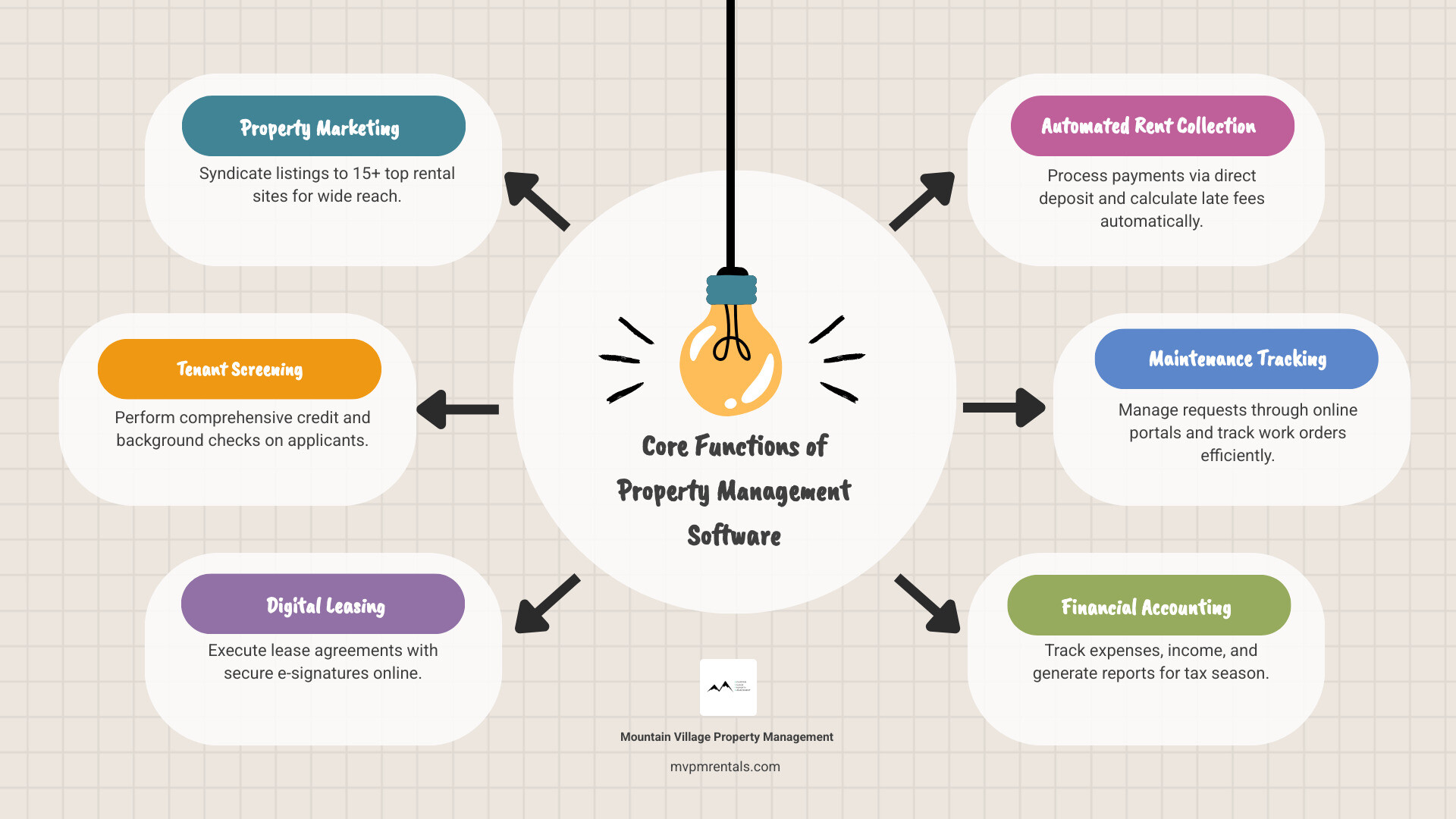
Core features to prioritize: Online rent collection, tenant screening, digital lease signing, maintenance tracking, and basic accounting.
The numbers tell the story. With 46.4 million renter households in the U.S. and 76% of landlords spending 40 hours each month on their properties, the administrative burden is heavy. Add rising shelter costs and a 7.1% vacancy rate, and small landlords must streamline operations or risk burnout.
Property management software is the solution. These platforms consolidate everything—from listing vacant units and screening applicants to collecting rent and generating tax reports—into a single dashboard. For landlords with one to ten units, the right software can eliminate spreadsheets, reduce late payments, and free up dozens of hours monthly.
The challenge isn’t whether to use software—it’s choosing the right one. Free platforms offer basic tools but may lack scalability. Mid-tier options add automation for a monthly fee, while enterprise solutions can be too complex for a small portfolio.
This guide cuts through the noise. We’ve reviewed the top property management for small landlords platforms, evaluated their features against real-world needs, and identified which tools deliver the best value. Whether you’re managing a single rental in Bozeman or a handful of properties across Montana, you’ll find clear, actionable recommendations.
I’m Pablo Negrete, co-owner of Mountain Village Property Management, where we manage single-family homes and multi-unit properties throughout Southwest Montana while maintaining a 98% occupancy rate. My hands-on experience with property management for small landlords—both through software and full-service solutions—informs every recommendation in this guide.
The Core Toolkit: Essential Software Features for Small Landlords
This section details the must-have features that transform how small landlords operate, saving time and protecting their investments. For small landlords, the right software isn’t just a convenience; it’s an “active assistant” that handles repetitive tasks, allowing us to focus on the bigger picture.
Automated Online Rent Collection
Gone are the days of chasing checks. Automated online rent collection is one of the most impactful features for any small landlord, designed to make late rent a thing of the past.
Benefits of automation:
- Improved cash flow: Rent is deposited directly into our bank account, securely and on time. This consistency helps us predict and manage our finances better.
- Reduced late payments: Tenant auto-pay features and automated rent reminders eliminate the need for us to constantly follow up, gently nudging tenants before the due date.
- Late fee calculation: Built-in late fees are automatically applied and tracked, enforcing lease compliance without awkward confrontations.
- Secure bank deposits: Direct deposit via ACH (Automated Clearing House) means funds move safely and efficiently, often with lower fees than credit card transactions.
With rents on the rise, ensuring timely payments and strict lease compliance is vital. Automated late fees and payment tracking are essential features that help us maintain a steady income and reduce financial stress.
Streamlined Tenant Screening and Leasing
Finding the right tenant is the most critical step in successful property management. A bad tenant can cost thousands in lost rent, damages, and legal fees. Thankfully, property management software offers robust tools to help us make informed decisions.
Online applications: We can send prospective tenants a link to apply online, eliminating physical forms and speeding up the process. This convenience is a win for both us and our potential renters.
Comprehensive background checks: With millions of U.S. households renting their homes, tenant screening is essential. The software allows us to perform thorough checks, including:
- Credit reports: To assess financial responsibility.
- Criminal background checks: To help promote safety and peace of mind.
- Eviction history: To avoid renters with a problematic past.
- Rental history verification: To confirm previous landlord references and payment behavior.
These insights are necessary for every rental management software, protecting our investments and helping us rent to reliable individuals.
Protecting your investment: By leveraging these tools, we significantly reduce the risk of costly issues. It is like having a digital detective working for us, ensuring we have all the information needed to make the best choice.
State-specific lease agreements: Property management software often provides lawyer-approved, state-specific lease templates. This is especially important for us in Montana, where laws can differ. These templates clearly define rights and responsibilities, helping us avoid legal pitfalls.
E-signatures: Once a tenant is approved, lease agreements can be signed digitally. This streamlines the process, making it faster and more convenient for both parties. No more printing, scanning, or mailing documents.
Secure document storage: All signed leases, applications, and related documents are stored securely in the cloud, accessible anytime. This eliminates paper clutter and ensures our important records are safe and organized. This also ensures compliance with Renting statistics.
Simplified Maintenance Management
Handling maintenance requests can feel like a never-ending game of whack-a-mole. Property management software transforms this often-stressful aspect of property ownership into a streamlined process.
Online request portal: Tenants can submit maintenance requests directly through an online portal, often with just a few clicks. They can even include photos or videos, giving us a clearer picture of the issue.
Work order tracking: Once a request is submitted, we can easily convert it into a work order. The software allows us to track its progress from submission to completion, ensuring nothing falls through the cracks. We can assign tasks to vendors, set deadlines, and monitor their work.
Vendor communication: Many platforms facilitate communication directly with our trusted vendors. We can send work orders, receive updates, and even process payments all within the system. This keeps everyone on the same page and speeds up resolution times.
Photo and video uploads for requests: This is a game-changer. When a tenant can show us exactly what is wrong, it helps us diagnose the problem more accurately and dispatch the right professional. It also provides valuable documentation.
Documented repair history: Every request, communication, and resolution is logged, creating a comprehensive repair history for each property. This is invaluable for budgeting, warranty claims, and future sales. It also shows due diligence in case of disputes.
Improved tenant satisfaction: Prompt and efficient handling of maintenance requests leads to happier tenants. When tenants feel heard and their issues are addressed quickly, they are more likely to stay longer. For more about how we handle maintenance, check out our Services.
Centralized Accounting and Financial Reporting
For many small landlords, managing the books can be daunting. From tracking every penny to preparing for tax season, it is easy to get overwhelmed. Property management software brings clarity and control to our finances.
Income and expense tracking: The software acts as our digital ledger, allowing us to categorize every income and expense related to our properties. This includes rent payments, repair costs, utility bills, and more. This detailed tracking is crucial for understanding our profitability.
Bank account synchronization: Many platforms offer the ability to sync directly with our bank accounts. This automates importing transactions, making reconciliation easier and reducing manual data entry errors.
Generating financial reports: With all our financial data in one place, we can generate a variety of reports with a few clicks. These include:
- Profit & Loss statements: To see how profitable each property is.
- Rent Roll Reports: A snapshot of all current tenants, leases, and rent statuses.
- Cash Flow Statements: To understand the movement of money in and out of our business.
Simplified tax preparation: Tax season becomes significantly less stressful. The software can often categorize expenses in a Schedule E-friendly format, making it easier for us or our accountant to prepare taxes. Some even help generate a 1099 Tax Form for contractors.
Landlord statistics: The average landlord income can be substantial. Effective income tracking and reporting are vital to better understand and manage this income. Our property management app should simplify rent payment management and provide comprehensive income-tracking features. This allows us to efficiently collect and monitor our earnings, ensuring we are always aware of our financial standing.
How Software Maximizes Your ROI and Minimizes Headaches
Beyond individual features, the right platform provides significant financial and time-saving benefits that directly impact your bottom line. We’re talking about tangible returns on your investment.
Saving Time and Money with Automation
Time is money. For small landlords, every hour spent on administrative tasks is an hour not spent growing a portfolio. Property management software is a master of automation, designed to give you back your time.
Reducing administrative hours: Many landlords spend over 40 hours a month on their properties. By automating tasks like rent collection, reminders, and lease renewals, you can drastically cut down on this time. Imagine reclaiming those hours to focus on proactive maintenance in Bozeman or finding your next investment in Belgrade.
Automating repetitive tasks: Software handles tasks like sending late rent notices, reminding tenants about lease renewals, and updating ledgers automatically and consistently. It’s like having a tireless assistant working 24/7.
Minimizing costly vacancies: When a unit goes vacant, speed matters. Every day a property sits empty in Butte or Livingston is lost income. Software helps get listings out fast by syndicating them to dozens of top rental sites with a single click, maximizing exposure and filling vacancies faster.
Avoiding bad tenants: Robust tenant screening features are paramount. The cost of evicting a bad tenant can be astronomical. By investing in thorough screening through software, you proactively protect your financial future.

Enhancing Landlord-Tenant Communication
Clear, consistent communication is the bedrock of a positive landlord-tenant relationship. Software provides the tools to foster this, making interactions smoother and more professional.
Centralized messaging portals: Instead of scattered emails and texts, all communication can happen within the software’s portal. This creates a single, organized thread for each tenant, making it easy to reference past conversations.
Automated notifications: Tenants receive automated reminders for rent, confirmation of payments, and updates on maintenance requests. This proactive communication reduces tenant anxiety and your workload.
Building professional relationships: When you communicate efficiently and respond promptly, tenants feel valued. This fosters a professional relationship built on trust, which can lead to longer tenancies and better care of your properties in Big Sky or Gallatin Gateway.
Creating a digital paper trail: Every message is timestamped and stored. This digital paper trail is invaluable in case of disputes, providing clear evidence of communications. If you have questions, don’t hesitate to Contact Us.
The Power of Mobile Apps for On-the-Go Management
Being tethered to a desktop isn’t practical. The best property management software offers robust mobile apps, putting your entire portfolio in the palm of your hand.
Managing properties from anywhere: Whether you’re inspecting a unit in Three Forks or running errands in Manhattan, you can access critical information and manage tasks from your smartphone. This flexibility is a game-changer.
Instant access to data: Need to check a lease, review a maintenance request, or verify a payment? It’s all instantly accessible via the mobile app, allowing for quick decision-making.
Faster response times: A tenant reports a leaky faucet? You can create a work order, assign a vendor, and communicate updates all from your phone, often resolving issues before you even get back to your office. This responsiveness boosts tenant satisfaction.
Inspecting properties with a mobile checklist: Many apps include features for property inspections. Use your phone to capture photos, make notes, and complete checklists during move-in, move-out, or routine inspections, streamlining the process.
Choosing the Right Property Management Software for Small Landlords
Selecting the best software depends on your portfolio size, budget, and long-term goals. Making the right choice now can save you significant headaches and money down the road.
Evaluating Your Needs Based on Portfolio Size
The “best” software isn’t a one-size-fits-all solution. Your needs will evolve as your portfolio grows.
- 1-3 units: Focus on core features and low cost. For landlords starting out, simplicity and affordability are key. Prioritize essentials like online rent collection, basic tenant screening, and lease management. Many free or low-cost options cater to this segment.
- 4-10 units: Need for automation and robust reporting. As your portfolio expands, so does the administrative burden. You’ll need more automation for reminders, maintenance tracking, and detailed financial reporting to understand each property’s performance.
- 10+ units: Scalability and advanced features are critical. For a growing number of properties, advanced accounting, integration capabilities, and features for efficiency across multiple units become essential. Choosing a platform that can grow with you avoids the pain of switching software later.
Key features to look for at each portfolio level:
- 1-3 Units:
- Online Rent Collection (automated)
- Tenant Screening (credit, criminal, eviction)
- Digital Lease Signing
- Basic Expense Tracking
- Mobile Access
- 4-10 Units:
- All above, plus:
- Maintenance Request Tracking with vendor management
- Property Marketing/Listing Syndication
- More detailed Financial Reporting (P&L, Cash Flow)
- Tenant Communication Portal
- 10+ Units:
- All above, plus:
- Advanced Accounting (bank sync, reconciliation)
- Integration with other tools
- Customizable Reports
- Dedicated Customer Support
- Scalability for future growth
Understanding Pricing Models and Hidden Costs
Software pricing can be as varied as the features offered. It’s crucial to understand the models to avoid surprises.
- Free vs. Paid platforms: Free plans are often supported by charging tenants for services or by offering premium add-ons. Paid platforms usually offer more comprehensive features, better support, and greater automation.
- Per-unit vs. flat-fee structures: Per-unit pricing scales with your portfolio size, while a flat fee can be cost-effective for larger portfolios (up to a certain cap).
- Common extra costs: Be aware of potential extra fees for tenant screening, credit card payment processing, expedited payouts, premium features, or e-signatures.
Here’s a simplified comparison of typical features:
| Feature | Free Plan (Typical) | Paid Plan (Typical) |
|---|---|---|
| Online Rent Collection | Manual entry, basic tracking | Automated payments, reminders, late fee calculation |
| Tenant Screening | Basic background check (tenant pays) | Comprehensive credit, criminal, eviction reports |
| Lease Management | Basic templates, manual uploads | State-specific templates, e-signatures, secure storage |
| Maintenance Tracking | Simple request portal | Work order management, vendor communication, photo upload |
| Accounting | Basic income/expense tracking | Bank sync, P&L, 1099, tax-ready reports |
| Listing Syndication | Basic listing on common sites | Wider syndication, premium placement |
| Customer Support | Limited (email/FAQ) | Phone, chat, dedicated support |
| Mobile App | Basic functionality | Full-featured, on-the-go management |
| Customization/Automation | Limited | Automated workflows, custom fields, advanced reporting |
Key Considerations for Small Landlords
When weighing your options, keep these considerations in mind to pick the best fit for your needs in Montana.
- All-in-one platforms vs. specialized tools: Do you want one platform that does everything, or are you comfortable using separate tools? All-in-one solutions are often more convenient.
- Level of automation offered: How much of your daily grind do you want the software to handle? More automation means more time saved.
- Quality of customer support: When something goes wrong, can you get help quickly? Check reviews for responsiveness.
- User interface and ease of use: Look for a tool that simplifies your life, not complicates it. An intuitive interface is key.
- Integration capabilities: Does the software play well with other tools you use, like accounting software or local advertising platforms?
Navigating the Downsides and Legal Landscape
While powerful, software is a tool, not a magic wand. Understanding its limitations and your legal duties is crucial for success. Even the best software can’t replace your judgment or legal expertise.
Potential Limitations and Drawbacks of Software
While the benefits are clear, it’s important to be realistic about what property management software can and cannot do.
- Initial learning curve: Like any new tool, there will be a period of adjustment. You’ll need to invest time upfront to learn the system and import your data.
- Risk of over-relying on automation: Automation is fantastic, but it’s not a substitute for human oversight. You still need to review reports, communicate personally with tenants, and handle unique situations. A landlord’s personal touch is still important.
- Data security concerns: You’re entrusting sensitive data to a third-party platform. Choose providers with robust security measures, data encryption, and regular backups.
- The challenge of switching platforms: Migrating data to a new system can be a painful process. If you plan to scale, it’s often better to start with a paid tool that can handle a larger portfolio than a free tool you might quickly outgrow.
- Not a substitute for hands-on management: Software automates tasks, but it doesn’t physically inspect properties, mediate complex tenant disputes, or make strategic investment decisions. It’s a tool to empower you, not replace you.
Ensuring Legal and Regulatory Compliance
Legal compliance is non-negotiable. A single misstep can lead to costly fines or lawsuits. Software can help, but it doesn’t absolve you of your responsibilities.
- State-specific lease templates: Software often provides lawyer-reviewed lease agreements for Montana’s specific laws. However, you should always review these documents and consult legal counsel for unique circumstances.
- Fair Housing Act (FHA) guidelines: Software can help ensure your listings and screening processes adhere to federal fair housing laws, but it’s your responsibility to understand and apply these guidelines consistently.
- Proper notice delivery: Montana law requires specific written notice for entry or rent changes. Software can automate the generation and delivery of these notices, creating a clear record.
- The role of a landlord: Your role extends beyond collecting rent. You are responsible for maintaining safe, habitable properties and complying with all housing codes. Software helps track maintenance, but you must ensure the work is done correctly.
- Software is not legal counsel: While software provides compliant forms, it’s not a substitute for professional legal advice. For complex situations like evictions, always consult with an attorney knowledgeable in Montana landlord-tenant law.
Conclusion: Taking the Next Step in Smart Property Management
Property management software can be a game-changer for property management for small landlords, offering efficiency, profitability, and peace of mind. By automating rent collection, streamlining tenant screening, and centralizing finances, the right software empowers you to compete and succeed in Montana’s dynamic rental market.
Reclaiming hours each month, reducing vacancy days, and avoiding costly tenant issues directly translates to a healthier bottom line and a less stressful landlord experience. Whether you’re managing a single rental in Bozeman or a growing portfolio, these digital tools are no longer a luxury but a necessity.
However, we understand that for some landlords, even with the best software, the demands of self-management can be overwhelming. Perhaps your portfolio has grown beyond what you’re comfortable managing, or you simply prefer a truly hands-off approach to your investment.
For landlords who find software isn’t enough, professional management is the next logical step. At Mountain Village Property Management, we offer a full-service solution designed to maximize rental income for our clients with a transparent 4.9%–8.9% management fee, no set-up fee (Signature & Summit plans), and consistently high occupancy rates. We handle everything from marketing and tenant placement to rent collection and 24/7 maintenance, ensuring your investment works for you without the daily headaches.
For landlords in the Bozeman area and surrounding communities like Belgrade, Butte, Livingston, Big Sky, Gallatin Gateway, Three Forks, and Manhattan, seeking a truly passive investment, we invite you to explore our Property Management services. Let us put our expertise and local knowledge to work for you.