Why Every Landlord Needs to Understand Rental Property Maintenance
Common rental repairs are an inevitable part of property ownership—from dripping faucets and clogged toilets to HVAC breakdowns and pest problems. Understanding what to expect helps you budget effectively, respond quickly, and keep your tenants satisfied.
The Most Frequent Rental Property Repairs:
- Plumbing Issues – Leaky faucets, clogged drains, running toilets, and water heater failures
- HVAC Problems – Furnace repairs, AC malfunctions, and filter replacements
- Electrical Work – Faulty outlets, circuit breaker trips, and outdated wiring
- Appliance Breakdowns – Refrigerators, stoves, dishwashers, and garbage disposals
- Pest Control – Rodents, cockroaches, bed bugs, and termites
- Structural Repairs – Roof leaks, drywall damage, and window/door issues
- Water Heater Replacement – Averaging $1,000-$3,000 per unit
- Smoke Detector Maintenance – Testing, battery changes, and 10-year replacements
- Garbage Disposal Issues – Clogs and motor failures
- Paint and Cosmetic Touch-ups – Normal wear and tenant turnover prep
Why This Matters:
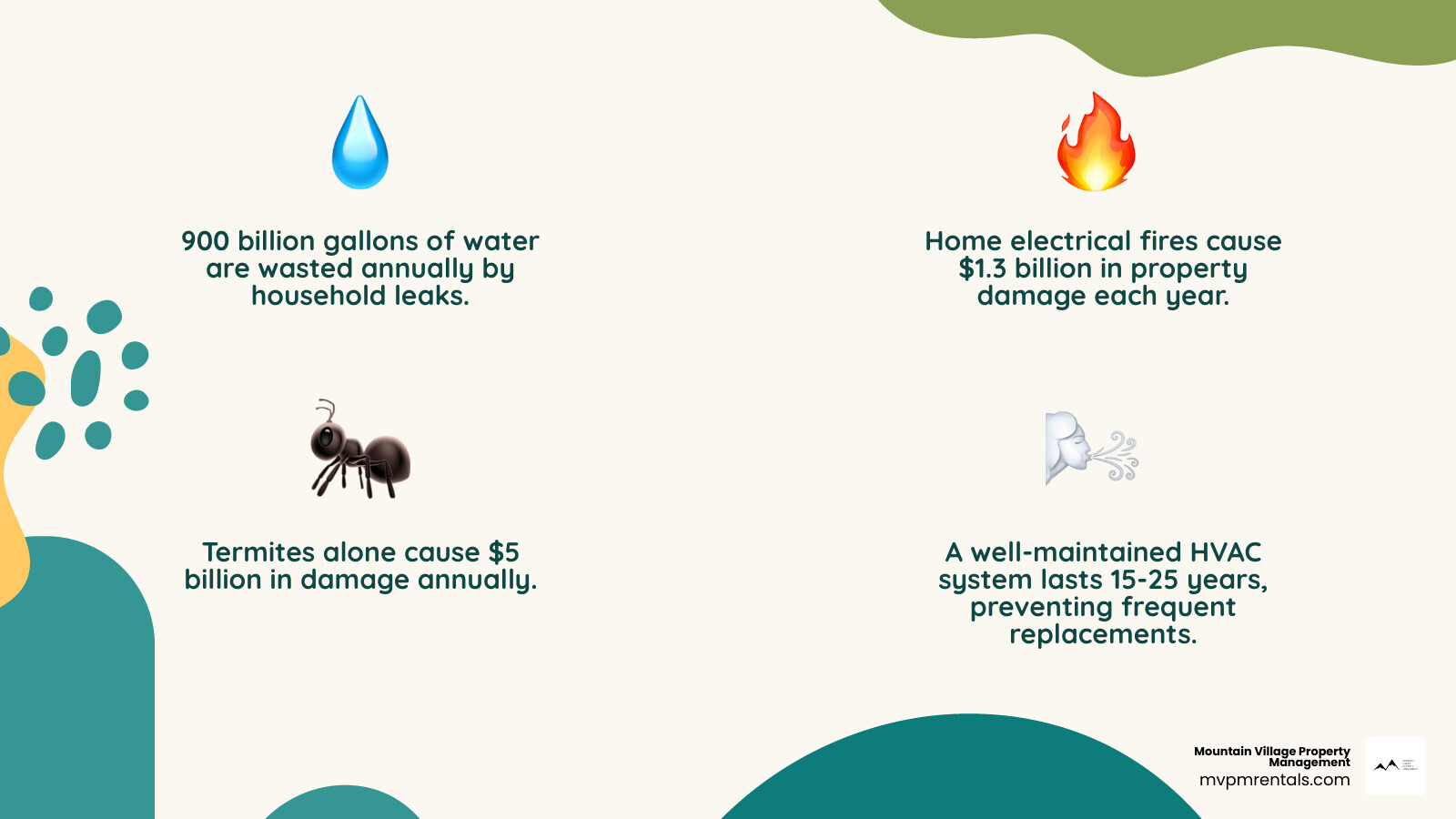
- 900 billion gallons of water are wasted annually by household leaks
- Home electrical fires cause $1.3 billion in property damage each year
- Termites alone cause $5 billion in damage annually
- A well-maintained HVAC system lasts 15-25 years versus frequent replacements
The reality is simple: neglecting small repairs today leads to expensive emergencies tomorrow. A slow drip can cost hundreds in water bills. A minor roof leak can turn into thousands in mold remediation. Staying ahead of maintenance protects your investment and keeps tenants renewing their leases.
As Pablo Negrete, co-owner of Mountain Village Property Management, I’ve seen how proactive maintenance directly impacts profitability and tenant satisfaction across hundreds of Bozeman-area rentals. Understanding common rental repairs before they happen is the difference between a thriving rental business and a constant financial drain.
The Top 10 Most Common Rental Repairs Landlords Face
Every rental property will eventually need repairs. Being prepared for these common rental repairs is key to safeguarding your investment, ensuring tenant safety, and maintaining property value. A proactive approach prevents minor issues from becoming costly emergencies. For comprehensive property management in Bozeman, Belgrade, Butte, Livingston, Big Sky, Gallatin Gateway, Three Forks, or Manhattan, Montana, explore our Property Management Bozeman services.
Plumbing Problems: Leaks, Clogs, and Water Heaters
Plumbing issues are consistently at the top of the list for common rental repairs, and they can escalate quickly if not addressed.
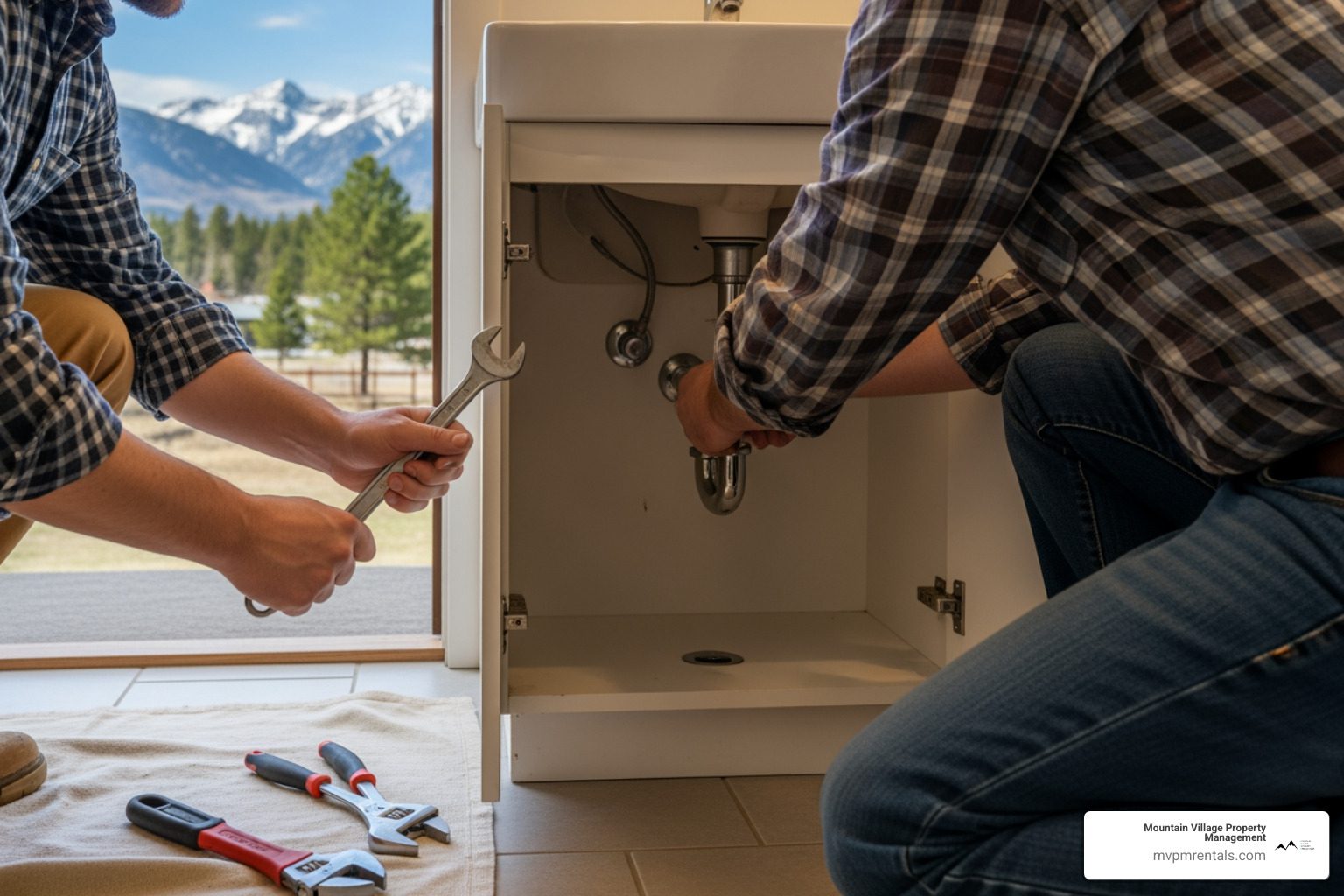
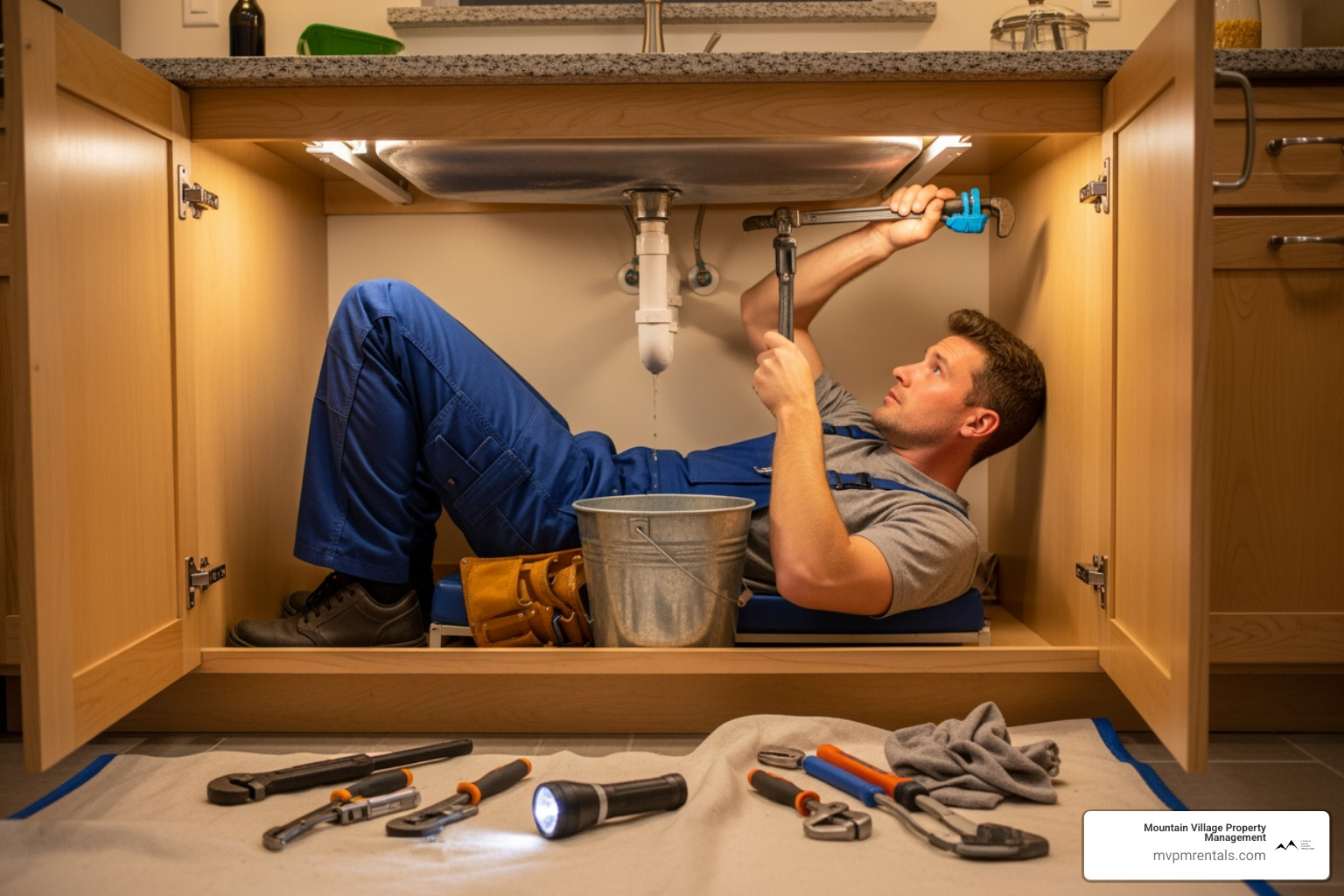
- Leaky Faucets and Pipes: A slow drip can waste hundreds in water bills, while undetected leaks lead to water damage and mold. We advise tenants to report any drips immediately. A simple fix under a sink might cost a plumber around $100.
- Clogged Toilets and Drains: Often caused by tenant misuse (flushing wipes or paper towels), these clogs are typically the tenant’s financial responsibility. However, an issue with the main drainpipe is the landlord’s. A running toilet is often an inexpensive fix, requiring less than $20 in parts.
- Water Heater Failure: Lack of hot water is a major inconvenience. While a heating element is a simple fix, a full replacement can cost $1,000 – $3,000. Annual maintenance is key to extending the unit’s life.
- Pipe Bursts: Frozen pipes are a serious risk in Montana winters and can cause extensive flood damage. We encourage tenants to keep thermostats at 55°F and let faucets drip during freezes to prevent this.
Addressing plumbing issues promptly is critical. Water damage can destroy surfaces, and mold can grow within 24-48 hours in wet areas.
HVAC Hiccups: Keeping Tenants Comfortable
A functioning HVAC system is essential for tenant comfort and is a legal requirement for a habitable living environment, especially with Montana’s harsh winters.
- Furnace and AC Repairs: Common issues range from a pilot light going out to AC refrigerant leaks. Many problems can be prevented with regular maintenance, like replacing furnace filters. Repairs can cost between $150 and $450.
- Regular Maintenance: A maintained HVAC system can last 15-25 years. We recommend annual professional inspections to identify potential problems before they become emergencies, ensuring the system runs efficiently.
Electrical Issues: From Flickering Lights to Fire Hazards
Electrical problems are not just inconvenient; they are significant safety hazards. Home electrical fires cause an estimated $1.3 billion in property damage annually.
- Common Issues: Tenants may report sparking outlets, flickering lights, or frequent circuit breaker trips. These signs require professional attention, as they can indicate overloaded circuits or outdated wiring.
- Safety Measures: We prioritize safety by recommending upgrades like GFCI outlets in kitchens and bathrooms. All electrical work must be handled by a professional electrician to ensure safety and code compliance.
Appliance Breakdowns and Garbage Disposals
Appliances are crucial for daily living, and breakdowns require prompt attention.
- Major Appliances: Refrigerators, stoves, and dishwashers have many parts that can fail. Most repairs require a qualified technician, who may charge $50-$100 per hour.
- Garbage Disposal Clogs: Disposals are a frequent headache, often clogged by inappropriate items like grease, bones, or fibrous vegetables. While some clogs can be cleared easily, a replacement unit can cost a couple of hundred dollars. Some landlords opt to remove them entirely to avoid recurring issues.

Pest Control Problems
Pest infestations can pose health hazards and cause property damage. Termites alone cause $5 billion in damage annually.
- Common Pests: Rodents, cockroaches, bed bugs, and termites are common invaders.
- Prevention and Responsibility: Proactive pest control is key. This includes tenant education on proper food storage and sealing entry points. If an infestation occurs, the landlord is generally responsible for hiring a professional exterminator, which can cost a few hundred dollars.
Structural and Cosmetic Fixes
These repairs affect the property’s integrity and appearance.
- Roof Leaks: Water stains on ceilings are a sign of a roof leak, which must be addressed immediately to prevent water damage, mold, and structural issues.
- Drywall Damage: While minor holes can be patched, larger damage requires professional repair. Water-damaged drywall must be thoroughly dried to prevent mold.
- Peeling Paint and Window/Door Issues: Peeling paint or issues with windows and doors are often normal wear and tear but should be addressed to maintain the property’s appeal and efficiency.
Defining Responsibilities: Landlord vs. Tenant
Understanding who is responsible for which repairs is crucial for a smooth landlord-tenant relationship and is outlined in the lease agreement. Clear communication is key to ensuring common rental repairs are addressed promptly and legally.
The Landlord’s Duty: Ensuring a Habitable Home
As landlords, we are legally obligated to provide a safe and habitable home under the “Warranty of Habitability.” This means the property must comply with all health and safety codes.
Our responsibilities generally include maintaining:
- Major Systems: Functional plumbing, electrical, and HVAC systems.
- Structural Integrity: The soundness of the roof, walls, foundation, and windows.
- Common Areas: Clean and safe shared spaces.
- Safety Features: Working smoke and carbon monoxide detectors.
The table below clarifies the types of repairs we handle:
| Emergency Repairs (Landlord Responsibility) | Non-Emergency Repairs (Landlord Responsibility) |
|---|---|
| – Burst pipe causing flooding | – Dripping faucet |
| – No heat during cold weather | – Running toilet (unless tenant-caused) |
| – Sewage backup | – Minor roof leak (not causing immediate structural risk) |
| – Defective lock compromising security | – Burnt-out stove element |
| – Electrical short circuit posing fire risk | – Non-functional garage door opener (if manual access is available) |
| – Non-working landlord-supplied refrigerator (if essential for food preservation) | – Interior door not closing properly |
| – Any issue that impacts a tenant’s health or safety or puts the building or property at immediate risk | – Minor plumbing leaks or drips |
We have established protocols to ensure quick action for urgent issues that threaten tenant safety or risk property damage. For a full overview of our services and how we assist landlords in Bozeman and surrounding areas, visit our services page.
Tenant Responsibilities for Common Rental Repairs
Tenants also have duties related to property upkeep, which are outlined in the lease.
- Minor Upkeep: Tenants are responsible for keeping the unit clean, preventing pests through proper waste disposal, and changing lightbulbs.
- Reporting Issues: A crucial tenant duty is to promptly report any maintenance issues. Early reporting prevents minor problems from becoming major ones.
- Damage vs. Normal Wear and Tear: Tenants must pay for damages they or their guests cause beyond normal wear and tear (e.g., large holes in walls, broken windows).
- Proper Use: Tenants must use appliances and fixtures correctly. For example, a clog from misusing a garbage disposal is the tenant’s responsibility.
- Providing Access: Tenants must provide reasonable access for inspections and repairs, typically with 24 hours’ written notice, except in emergencies.
Understanding these distinctions helps foster a cooperative relationship. For more detailed information on tenant rights and responsibilities, we recommend consulting resources like this guide on renters’ rights.
Safety First: Smoke Detectors and Other Equipment
Safety is paramount. We have specific legal obligations for safety equipment.
- Smoke and Carbon Monoxide Detectors: Montana law requires landlords to install and maintain smoke detectors on every level. We also install carbon monoxide detectors in properties with fuel-burning appliances.
- Installation and Testing: We ensure correct installation and conduct periodic inspections. Tenants are responsible for monthly testing and reporting issues.
- Maintenance: While tenants typically replace batteries, the entire detector unit must be replaced every 10 years. A professional repair or replacement costs around $80 an hour. Tampering with these devices is a serious offense. For comprehensive guidelines, refer to the NFPA’s resources.
A Proactive Approach: Preventing and Managing Repairs
The best way to handle costly common rental repairs is to prevent them. A proactive maintenance strategy saves money, reduces emergencies, and keeps tenants happy. For landlords in Bozeman, Belgrade, Butte, Livingston, Big Sky, Gallatin Gateway, Three Forks, or Manhattan, Montana, our Bozeman property management services are designed to handle these proactive measures for you.
Creating a Proactive Maintenance Schedule
A structured maintenance schedule is the backbone of effective property management.
- Seasonal Checklists: We use seasonal checklists to stay ahead of maintenance. Fall is for gutter cleaning and furnace inspections, winter for pipe protection, spring for exterior checks, and summer for AC servicing and pest control.
- Routine Inspections: Regular interior and exterior inspections help us catch minor issues like leaks or pest activity before they become major problems.
- Gutter Cleaning: We regularly clean gutters to prevent water overflow that can damage the roof, siding, and foundation.
- HVAC Servicing: Annual professional HVAC servicing extends the system’s lifespan and ensures efficiency.
- Tenant Education: We empower tenants to help with upkeep by educating them on tasks like changing filters and using appliances correctly.
Budgeting for the Unexpected: How to Plan for Maintenance Costs
Even with proactive maintenance, unexpected repairs happen. Effective budgeting is crucial.
- The 1% Rule: A common guideline is to set aside 1% of the property’s value annually for maintenance.
- The $1 Per Square Foot Rule: Another approach is to allocate $1 per square foot of living space annually.
- Creating a Reserve Fund: We recommend treating maintenance as a fixed expense and consistently funding a dedicated reserve account for both routine and emergency repairs.
- Tracking Expenses: Carefully tracking all maintenance costs helps in forecasting future budgets.
Here’s an overview of average costs for some major repairs:
- Water Heater Replacement: $1,000 – $3,000
- HVAC System Repair (Furnace/AC): $150 – $450 (for repairs, full replacement significantly higher)
- Plumber (hourly): $50 – $100 per hour
- Pest Control Specialist: A few hundred dollars
- New Garbage Disposal (including installation): A couple of hundred bucks
- Smoke Detector Repair/Replacement (pro): $80 per hour
The Power of Documentation and Technology
In property management, good documentation is essential for legal protection and streamlined operations.
- Documenting Repairs: We document every maintenance request, from the initial report to the final resolution and cost, including photos where appropriate.
- Using Technology: Property management software is invaluable for logging repairs, tracking costs, and forecasting future expenses.
- Tenant Communication: Modern software includes tenant portals where residents can submit maintenance requests directly. At Mountain Village Property Management, we leverage such property management software to manage repairs efficiently and keep all parties informed.
Navigating Disputes and Legal Obligations for Common Rental Repairs
Even with the best proactive measures, disputes can sometimes arise regarding common rental repairs. Understanding the legal framework, tenant rights, and landlord obligations in Montana is essential for resolving these issues fairly and effectively.
What Tenants Can Do If Repairs Aren’t Made
If a landlord fails to make necessary repairs, tenants in Montana have certain options.
- Written Notice: The first and most crucial step is for a tenant to provide us with formal written notice of the needed repair. This is required by the Montana Residential Landlord-Tenant Act and creates a legal record.
- Contacting Housing Authorities: If a landlord is unresponsive to requests for repairs affecting habitability, tenants can contact local health or housing authorities, who can inspect the property and order repairs.
- Risks of Withholding Rent or “Repair and Deduct”: While some states allow tenants to withhold rent or make repairs and deduct the cost, these are legally complex and risky strategies in Montana. Tenants can face eviction if these actions are not performed in strict accordance with the law. We strongly advise tenants to seek legal counsel before considering these options.
We always encourage open communication to resolve issues before they escalate.
Understanding Tenancy Types and Repair Responsibilities
Under the Montana Residential Landlord-Tenant Act, repair responsibilities are consistent regardless of the lease term (e.g., monthly or yearly). The key factors are the nature of the repair and who caused the damage. Our core duty is to maintain a habitable property. Tenants are responsible for cleanliness, minor upkeep, reporting issues promptly, and covering the cost of any damage they or their guests cause. The focus is always on the property’s condition and the cause of the needed repair.
Legal Consequences for Negligent Landlords
Failing to address essential common rental repairs, especially those affecting habitability, can have serious legal and financial consequences for landlords.
- Fines and Lawsuits: Local authorities can impose fines for code violations. Tenants may sue for damages if a landlord’s negligence leads to injury or an uninhabitable living situation.
- Rent Reduction: A court might order a rent reduction for the period the property was uninhabitable.
- Business Impact: Neglecting repairs damages a landlord’s reputation and leads to higher tenant turnover, increasing vacancy costs.
At Mountain Village Property Management, we understand these risks and are committed to prompt repair resolution to protect our clients’ investments and ensure legal compliance with the Montana Residential Landlord-Tenant Act.
Frequently Asked Questions about Rental Repairs
How quickly does a landlord have to make a repair?
The timeframe for repairs depends on the nature of the issue:
- Emergency Repairs: For emergencies that affect a tenant’s health, safety, or the property’s structural integrity (e.g., no heat in winter, burst pipes, electrical short circuits), we respond as quickly as possible, typically within 24-48 hours. Montana law allows for entry with 24 hours written notice, but an emergency may waive this notice requirement.
- Non-Emergency Repairs: For less urgent issues (e.g., a dripping faucet, a running toilet), the expectation is a “reasonable time.” This can vary but is often considered around 7-30 days, depending on the complexity of the repair and availability of parts or specialists. We always strive to address all repairs promptly to maintain tenant satisfaction.
Can a landlord charge a tenant for repairs?
Yes, but only under specific circumstances:
- Normal Wear and Tear: Landlords are responsible for repairs due to normal wear and tear. This includes things like faded paint, worn carpets, or minor scuffs on walls that occur through ordinary use. We cannot charge tenants for these.
- Tenant-Caused Damage: If the repair is needed due to damage caused by the tenant, their guests, or pets (e.g., a hole punched in a wall, a broken window, pet stains on carpets), then the tenant is responsible for the cost of the repair. This distinction should be clearly outlined in the lease agreement.
What is considered “normal wear and tear”?
“Normal wear and tear” refers to the deterioration that occurs naturally and without negligence or abuse. Examples include:
- Faded paint or minor scuffs on walls
- Worn-out carpet or flooring in high-traffic areas
- Minor scratches on countertops
- Loose door handles or cabinet hinges
- Sun-faded blinds or curtains
In contrast, damage that a tenant would typically be charged for includes:
- Large holes in walls
- Broken windows or doors
- Excessive pet damage (e.g., deep scratches, urine stains)
- Missing fixtures or appliances
- Damage from neglect (e.g., mold due to lack of ventilation despite tenant education)
We document the property’s condition carefully before a tenant moves in (using a Condition of Property form) to help differentiate between normal wear and tear and tenant-caused damage when they move out.
Conclusion
Understanding and effectively managing common rental repairs is not just a burden; it’s a strategic pillar for successful property ownership in Bozeman and beyond. From addressing plumbing leaks and HVAC failures to ensuring electrical safety and managing pest control, a proactive approach saves money, minimizes stress, and protects your investment. By clearly defining responsibilities, budgeting wisely, and carefully documenting every repair, we cultivate positive landlord-tenant relationships and maintain the long-term value of your property.
At Mountain Village Property Management, we are dedicated to maximizing your rental income and providing hassle-free, full-service property management. Our expertise in anticipating and resolving common rental repairs ensures your properties in Bozeman, Belgrade, Butte, Livingston, Big Sky, Gallatin Gateway, Three Forks, and Manhattan, Montana, are always in top condition.
Contact us for professional property management services today!
Phone: 406-602-2018
Email: admin@mvpmrentals.com