What Is Residential Building Management (And Why It Matters for Property Owners)
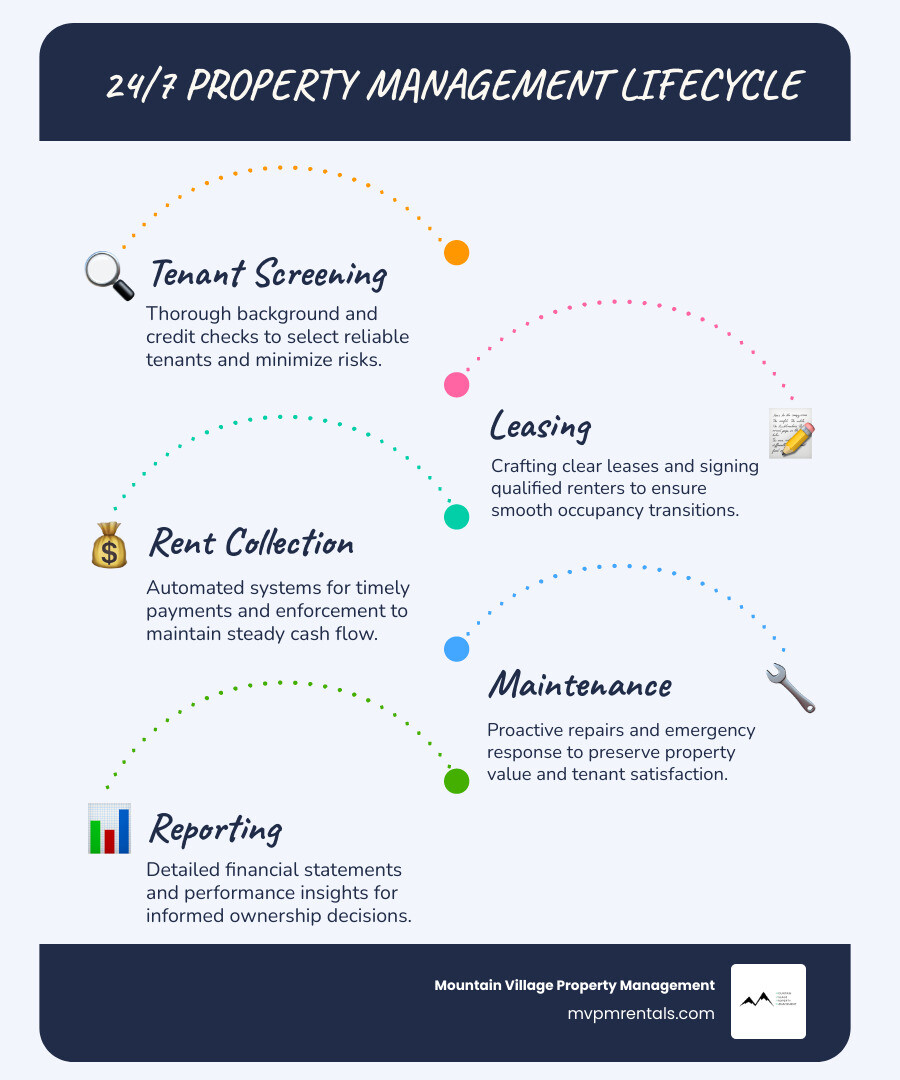
Residential building management is the full-time process of overseeing rental properties on behalf of owners — covering everything from tenant screening and rent collection to maintenance, legal compliance, and financial reporting.
If you own rental property in the Bozeman area and want to know what professional management actually includes, here’s a quick breakdown:
| What It Covers | What It Means for You |
|---|---|
| Tenant screening & leasing | Qualified tenants, lower vacancy risk |
| Rent collection & enforcement | Consistent, on-time income |
| Maintenance & repairs | Protected property value, happy tenants |
| Legal compliance | Protection from costly violations |
| Financial reporting | Clear view of your investment’s performance |
Owning rental property can be a strong financial move — but it comes with real demands. There are roughly 44 million rental households in the U.S., and behind each one is a web of daily tasks that most owners didn’t sign up to manage themselves. As one property management firm puts it: “While owning a rental property can be a sound financial investment, it can also be extremely stressful. When tenants call in the middle of the night because of a maintenance emergency, that stress level rises.”
That’s exactly the problem professional residential building management solves.
I’m Pablo Negrete, co-owner of Mountain Village Property Management (MVPM) in Bozeman, Montana, where my team and I have built our reputation on transparent, results-driven residential building management across Southwest Montana — maintaining a 98% occupancy rate for our owners. In this guide, I’ll walk you through everything you need to know to make an informed decision about your property.
Understanding the Core of Residential Building Management
At its heart, residential building management is a specialized branch of facility management. While the term “facility management” often brings to mind massive factories or skyscrapers, in the residential world, it’s about making a house (or an apartment) feel like a home while ensuring it operates like a well-oiled machine.
In the industry, we often divide services into “hard” and “soft” categories. Hard services are the technical, structural necessities—think HVAC systems, fire alarms, elevators, and plumbing. If these fail, the building stops functioning. Soft services are the human-centric elements that make a property livable and desirable, such as cleaning, landscaping, security, and resident relations.
Professional organizations like The Institute of Residential Property Management emphasize that a manager’s role is to balance these technical needs with the expectations of the people living inside. It’s about asset preservation—ensuring that a property in Belgrade or Big Sky doesn’t just survive the winter, but actually increases in value over time.
Key Roles in Residential Building Management
A successful management operation isn’t a one-person show; it requires a coordinated team. When you partner with a firm, you are tapping into a network of professionals:
- Community Managers: These are the “captains of the ship” who oversee daily operations, staff supervision, and high-level resident issues.
- Leasing Consultants: The face of your property. They handle marketing, show units to prospective renters, and manage the move-in process to keep occupancy high.
- Maintenance Technicians: The heroes who show up when a pipe bursts at 2 AM. They handle both emergency repairs and the preventative work that stops emergencies from happening.
- Administrative Staff: The backbone that handles the paperwork, from lease renewals to processing work orders.
Choosing the right team is critical for your investment’s health. For a deeper dive into selecting the right partner, check out our guide on Finding Your Perfect Match: Property Management in Bozeman.
The Difference Between Residential and Commercial Oversight
While both involve collecting rent and fixing toilets, residential and commercial management are two different animals. Commercial management deals with businesses and complex, multi-year leases that often require tenants to handle their own interior maintenance.
In residential building management, the focus is on livability. Residents have a deeper emotional connection to their space. This means:
- Tenant Needs: Residential tenants expect faster responses to “comfort” issues like heating or hot water.
- Lease Complexity: Residential leases are generally more standardized but must adhere strictly to fair housing laws.
- Safety Regulations: There is a heavy focus on life-safety systems (smoke detectors, egress) as required by groups like the Facilities Management Association.
- Occupancy Focus: Because residential leases are shorter (usually 12 months), there is a constant cycle of marketing and turnover that requires a proactive approach.
Primary Responsibilities: From Tenant Screening to Maintenance
The day-to-day of residential building management is a balancing act. For owners in Manhattan, Montana, or Gallatin Gateway, the goal is simple: maximize income while minimizing headaches. Here is how we handle the heavy lifting.
Proactive Maintenance and Upkeep
The most expensive way to manage a building is to wait for things to break. We advocate for a “preventative” rather than “reactive” model. Research into Japanese apartment management shows that regular inspections and small fixes can drastically reduce long-term capital expenditures.
We look at everything from the roof to the boiler. This includes seasonal landscaping to keep curb appeal high and fire safety checks to ensure compliance with local Montana ordinances.
One big question owners ask is whether to keep maintenance in-house or outsource it. Here’s a quick comparison:
| Feature | In-House Management | Outsourced (External Providers) |
|---|---|---|
| Control | High; staff follows your direct rules | Lower; depends on Service Level Agreements (SLAs) |
| Cost | Fixed (salaries/benefits) | Variable (pay-per-service) |
| Speed | Immediate for routine tasks | Depends on contractor availability |
| Expertise | General knowledge | Highly specialized (e.g., elevator repair) |
| Common Model | Rarely used alone | Used by 88% of companies for specific tasks |
Most successful residential building management strategies use a “mixed model”—having a core team for daily tasks while outsourcing specialized technical work. To learn more about how this works locally, see our overview of Bozeman Montana Property Management.
Financial Management and Reporting
A property is an investment, and you can’t manage what you don’t measure. Professional managers handle the “boring but critical” financial tasks:
- Rent Optimization: We analyze the local market to ensure you aren’t leaving money on the table, while also avoiding the high turnover caused by sudden, massive rent hikes.
- Operating Expenses: Tracking every penny spent on cleaning, repairs, and utilities.
- Tax Documentation: Providing 1099s and year-end reports that make your CPA’s life much easier.
- Profit Forecasting: Helping you plan for future upgrades, like new appliances or flooring, so they don’t catch you off guard.
If you are looking for help specifically with the financial and marketing side, check out Rental Agencies Bozeman Montana.
The Role of Technology in Modern Residential Building Management
The days of paper checks and “calling the guy” are over. Modern residential building management relies heavily on a “tech stack” to keep things efficient.
In fact, property managers save landlords an average of 22 hours a month by automating tasks. This is done through platforms like Residential Property Management Software | Buildium, which allow us to track everything from a single dashboard.
Key tech features include:
- IoT Sensors: We can now monitor for water leaks or furnace failures in real-time, often catching a problem before the tenant even notices.
- Smart Locks: These make unit turnovers in Butte or Livingston seamless, allowing for “self-guided” tours and secure access for vendors without juggling physical keys.
- Online Portals: Tenants can pay rent via ACH or credit card, which significantly reduces late payments.
Improving Tenant Satisfaction Through Digital Tools
Technology isn’t just for the manager—it’s for the renter. Today’s tenants, especially in tech-forward areas like Bozeman, expect 24/7 accessibility. Through our Property Management Services, we provide portals where residents can:
- Submit maintenance requests with photos.
- Track the status of their repair in real-time.
- Book community amenities (like a clubhouse or gym).
- Receive building-wide announcements via text or email.
This transparency builds trust, and trust is the number one driver of tenant retention.
Data-Driven Best Practices for Residential Building Management
We don’t guess; we use data. By tracking Key Performance Indicators (KPIs), we can spot trends before they become problems. For example, if we notice maintenance costs rising on a specific property in Three Forks, we can investigate if a major system is nearing the end of its lifecycle.
Following standards set by the British Institute of Facilities Management, we focus on:
- Energy Efficiency: Using smart thermostats and LED lighting to lower utility bills.
- Occupancy Optimization: Identifying why certain units stay vacant longer and adjusting marketing strategies accordingly.
- Market Analysis: Keeping a pulse on what other rentals in Gallatin County are offering so your property stays competitive.
Navigating Legal Compliance and Safety Regulations
This is the area where DIY landlords get into the most trouble. The legal landscape for residential building management is a minefield of local, state, and federal regulations.
From the Fair Housing Act, which dictates how you must screen and interact with tenants, to specific Montana “Just Cause” eviction protocols, there is no room for error. We also work with organizations like The Association of Residential Managing Agents to stay updated on health and safety codes.
In Southwest Montana, we have specific challenges:
- Snow Removal: Local ordinances in places like Big Sky and Bozeman require strict adherence to sidewalk clearing to avoid fines and liability.
- Habitability: Ensuring heating systems meet state requirements during our -30°F cold snaps.
- Safety Inspections: Regular checks of smoke detectors, carbon monoxide sensors, and fire extinguishers.
Navigating these rules is a full-time job. For more on how to find a partner who understands these local nuances, read From Apartments to Estates: Finding Your Perfect Bozeman Property Management Partner.
Frequently Asked Questions about Residential Building Management
What is the difference between a property manager and a building manager?
While the terms are often used interchangeably, a building manager (or site manager) usually focuses on the physical structure and onsite staff of a specific complex. A property manager typically handles the broader “business” side, including leasing, financial reporting, and the owner relationship across multiple properties. At MVPM, we provide a comprehensive service that covers both.
How does professional management improve rental property ROI?
Professional management improves your Return on Investment in three main ways:
- Lower Vacancy: Faster marketing and better tenant retention keep the rent flowing.
- Reduced Costs: We have pre-negotiated rates with local vendors and catch maintenance issues when they are $100 fixes, not $10,000 replacements.
- Time Recovery: By saving you 20+ hours a month, you are free to find your next investment or simply enjoy your weekends.
What are the most common challenges in residential building management?
The “big three” are:
- Rising Costs: Balancing the need for quality repairs with a set budget.
- Tenant Expectations: Managing the “Amazon-prime” mindset where residents expect instant solutions to every issue.
- Compliance: Keeping up with ever-changing safety and housing laws.
Conclusion
Managing a residential property in Southwest Montana shouldn’t be a source of stress. Whether you have a single-family home in Belgrade or a multi-unit complex in Bozeman, the right residential building management strategy is the key to a profitable, hassle-free investment.
At Mountain Village Property Management, we pride ourselves on being the local experts who treat your property like our own. We offer a low 4.9%–8.9% management fee, no set-up fee (Signature & Summit plans), and a commitment to high occupancy rates that keep your investment performing at its peak.
Ready to get your time back and maximize your rental income? Let’s talk about how we can help.
Contact us today:
- Email: admin@mvpmrentals.com
- Explore our full range of Property Management Services
Let us handle the midnight calls so you don’t have to.